An American Mom in Germany: How Letting Her 8-Year-Old Walk to School Alone Changed Everything
May 28, 2026 - 18:34

When Sarah Thompson moved her family from Ohio to a small town in Germany, she expected to face language barriers and cultural differences. What she did not expect was the daily battle with her own anxiety over something as simple as letting her son walk to school by himself.
In the United States, the idea of an eight-year-old navigating city streets alone would raise eyebrows, if not alarm. But in Germany, it is routine. Children as young as six are often seen walking or biking to school without adult supervision. The streets are designed with pedestrian safety in mind, and the culture places a high value on early independence.
Thompson admits that the first few weeks were agonizing. She would watch from the window, heart racing, as her son disappeared around the corner. She considered driving him, but his school was only a 15-minute walk away, and the other neighborhood kids all made the trip on foot.
"I felt like a bad mother either way," she says. "If I let him go, I was terrified. If I drove him, I was coddling him."
After talking with German parents and teachers, she decided to trust the system. She walked the route with her son several times, pointing out safe crossings and landmarks. She gave him a simple phone for emergencies. Then she let go.
The result surprised her. Within a month, her son's confidence soared. He started walking with a group of friends, taking pride in his independence. He learned to manage his time, check for traffic, and even help younger children cross the street. Thompson noticed that he was more responsible at home, too.
"Now I realize that my fear was rooted in a culture that treats childhood as something to be constantly supervised," she says. "Here, independence is seen as a skill you teach, not a risk you avoid."
She acknowledges that not every neighborhood is safe, and that parents must make their own choices. But for her family, the experience was transformative. Her son is now nine and walks to school year-round, rain or shine. He has never been late, never gotten lost, and never had a problem.
Thompson's story reflects a broader difference in parenting philosophies between the United States and many European countries. While American parents often face social pressure to supervise children closely, German parents tend to prioritize self-reliance from an early age. The result, Thompson says, is a child who is not only more capable but also happier.
"I learned that my anxiety was not protecting him," she says. "It was holding him back."
MORE NEWS

October 11, 2026 - 01:08
Jyothika reveals Suriya handles all school responsibilities for their children: From tracking school emails to remembering sports days, the actor's hands-on parenting offers a glimpse of the invisible work that keeps family life runningImagine it is 7 am on a school morning. A child suddenly remembers a sports event that needs a signed permission slip. Lunches are not packed. An email about a uniform change sits unread in an...

October 10, 2026 - 05:08
A Honest Look at Imperfect Parenting in B+ MomProduced, written, and performed by actress and comedian Melissa Greenspan, B+ MOM tells a tale which many mothers have personally experienced in their own families. Sometimes it`s tough parenting...

October 9, 2026 - 23:08
Moms Share the Real, Messy Side of Parenting TodayA recent collection of posts from online mom groups paints a picture of parenting that is far removed from the polished images often seen on social media. Instead of matching outfits and perfectly...
October 9, 2026 - 16:16
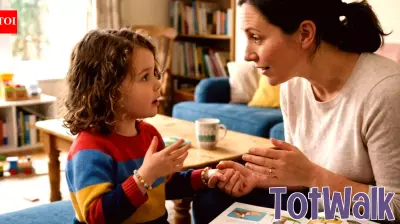
Psychology says children who ask the same question repeatedly may not be ignoring the answer; they may be searching for an explanationA child can ask `why?` several times in the space of a few minutes. The first answer may be met with a pause, followed by the same question again, sometimes with barely any change in wording. For...