The Importance of Apologizing to Your Child
21 September 2026
Every parent has those moments. You snap over a spilled cup of juice. You raise your voice because you are running late and the shoes still are not on. You promise to come to the school play and then a work emergency swallows the afternoon. Later, when the house is quiet, the sting of your own reaction sits with you. What you do next matters more than most parents realize.
Apologizing to your child is not a sign of weakness. It is one of the most powerful parenting tools you have. It repairs connection, teaches emotional honesty, and models the exact behavior you want your child to carry into friendships, classrooms, and eventually their own relationships. It also does something quieter and just as important: it shows your child that respect flows in both directions, not just from the smaller person to the bigger one.
This article takes a close look at why apologies matter, how to deliver them well, when they can go wrong, and what to do in the messy situations where a simple "I am sorry" does not feel like enough.
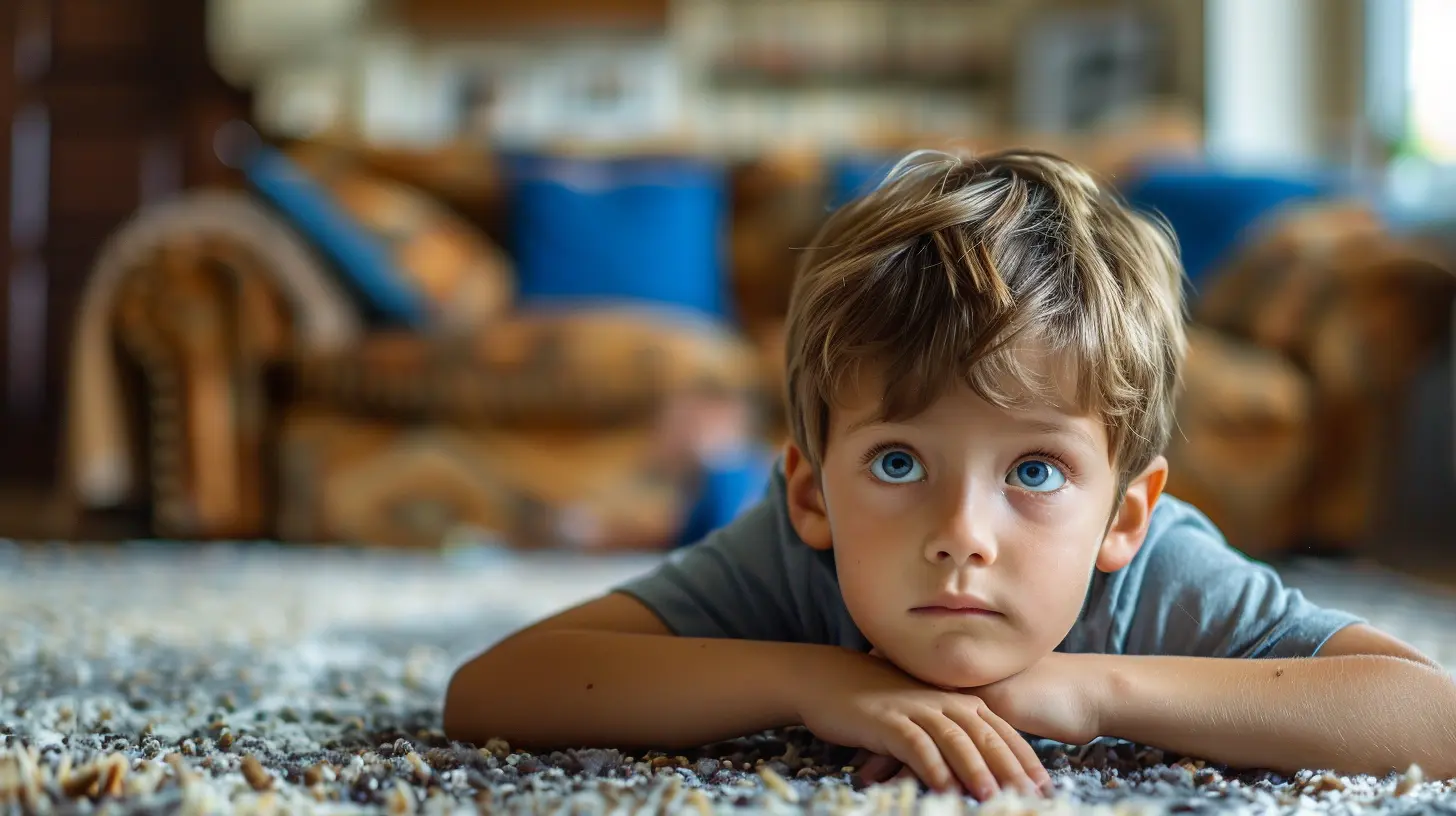
Why Apologizing to a Child Is Different From Apologizing to an Adult
When you apologize to a colleague or a friend, the relationship is usually between equals. With your child, there is a power imbalance built into the relationship by design. You make the rules, you provide the care, and you hold most of the authority. That imbalance changes what an apology means.For a child, an apology from a parent does several things at once. It confirms that the child's feelings are real and worth noticing. It signals that the parent is not above the rules of kindness. It also reduces the confusion children often feel when someone they love and depend on behaves in a way that hurts.
Children are wired to trust their parents. When a parent does something hurtful and then acts as if nothing happened, the child faces a dilemma. Either the parent did something wrong, or the child is wrong for feeling hurt. Many children resolve this by deciding they must be the problem. That conclusion, repeated over time, can shape how they see themselves for years.
An apology interrupts that cycle. It tells the child: you are not the problem. I was. And I am willing to say so.

What Happens in a Child's Brain When a Parent Apologizes
You do not need a neuroscience degree to understand the basics. Children learn how relationships work by watching the people closest to them. Every interaction is a small lesson about conflict, repair, and trust.When a parent apologizes, the child gets to witness a full emotional arc. Something went wrong. Someone took responsibility. The relationship was restored. That arc is the foundation of secure attachment. It teaches a child that ruptures are survivable and that closeness can be rebuilt.
There is also a practical benefit. Children who see adults apologize tend to develop better conflict resolution skills themselves. They learn that saying sorry is not humiliating. They learn that admitting fault does not make you smaller. They learn that accountability is part of love, not the opposite of it.

The Hidden Costs of Never Apologizing
Many parents grew up in homes where adults never apologized. The unspoken rule was simple: parents are always right, and children should get over things quickly. If that was your experience, you might feel uncomfortable with the idea of saying sorry to a child. That discomfort is worth examining.When parents never apologize, several things tend to happen.
First, children learn to suppress their feelings. If no one acknowledges the hurt, the child concludes that expressing hurt is pointless or dangerous. Over time, they may stop bringing problems to their parents at all.
Second, children learn a distorted version of accountability. They see that power excuses behavior. They may then imitate that pattern with siblings, friends, or eventually their own children.
Third, the parent-child relationship accumulates small wounds that never heal. Nothing catastrophic happens, but the closeness fades. Children become more guarded. Conversations get shorter. Trust erodes in ways that are hard to trace back to any single event.
None of this means a parent must apologize for every rule or every limit. Setting boundaries is not a wrongdoing. The issue is how you handle moments when you actually cause harm, whether through harsh words, neglect, broken promises, or unfair treatment.

What a Real Apology Sounds Like
A genuine apology has a few key ingredients. It names what happened. It takes ownership. It acknowledges the impact. And it points toward change.Here is a simple example:
"I yelled at you this morning when you were moving slowly. That was not fair. You were not doing anything wrong. I was stressed about being late, and I took it out on you. I am sorry. Next time I will take a breath before I speak."
Notice what this apology does not do. It does not include the word "but." It does not blame the child. It does not ask for reassurance. It does not turn the moment into a lecture.
Compare that to a common pseudo-apology:
"I am sorry you feel that way."
This is not an apology. It is a deflection. It puts the problem back on the child's feelings rather than the parent's behavior.
Or this one:
"I am sorry, but you know how you get when you are tired."
This starts like an apology and ends like an accusation. Children hear the "but" and understand that the apology is not real.
Why "I Am Sorry" Alone Is Often Not Enough
Words matter, but they are only part of the picture. Children are extremely sensitive to inconsistency. If a parent apologizes and then repeats the same behavior the next day, the apology starts to feel hollow. Over time, the child may stop trusting apologies altogether.This does not mean you have to be perfect. It means the apology should be paired with a genuine effort to change. That effort does not need to be dramatic. It might mean stepping away for a moment when you feel yourself getting heated. It might mean writing down a reminder. It might mean telling your child, honestly, that you are working on it.
Children do not expect flawless parents. They do expect honest ones.
Apologizing for Big Things and Small Things
Some parents apologize easily for small mistakes but struggle with bigger ones. Others do the opposite. Both patterns have consequences.Small apologies matter because they happen often. The everyday moments, like snapping over a toy or forgetting to pack a snack, are where children learn what repair looks like in ordinary life. If you only apologize for major events, your child may learn that small hurts do not count.
Big apologies matter because they address the moments that shape a child's story about themselves. If you missed an important event, said something cruel in anger, or broke a serious promise, that moment may live in your child's memory for a long time. A thoughtful apology does not erase the memory, but it can change what the memory means.
Timing: When to Apologize and When to Wait
Timing is one of the trickiest parts of apologizing to a child. Apologize too soon and you may still be flooded with emotion, which can make the apology feel rushed or defensive. Wait too long and the child may feel that the moment has passed or that you are only apologizing because you want something.A good rule of thumb is to apologize as soon as you are calm enough to be sincere. That might be five minutes later. It might be the next morning. What matters is that you do not let it slide indefinitely.
If your child is still very upset, you can acknowledge that and give them space. Something like this works well:
"I want to apologize for what I said earlier. I can see you are still upset. We do not have to talk about it right now. I just wanted you to know that I am sorry, and I am here when you are ready."
This respects the child's pace without abandoning the apology.
Apologizing in Front of Other People
Should you apologize to your child in front of siblings, grandparents, or friends? In most cases, yes, if the original offense happened in front of them. Public repair reinforces that the hurt was real and that you are not hiding from it.That said, there are situations where a private apology is better. If your child is easily embarrassed or if the audience is likely to make comments, a quiet moment alone may be more meaningful. You can always follow up with a brief acknowledgment in front of others if it feels appropriate.
The key is to avoid using the presence of others as a reason to avoid apologizing. Children notice when a parent only apologizes behind closed doors. It can feel like the apology is more about protecting the parent's image than repairing the relationship.
Common Mistakes Parents Make
Even well-meaning parents stumble when apologizing. Here are some of the most common pitfalls.The Conditional Apology
"I am sorry, but you need to understand why I reacted that way."This is not an apology. It is a justification dressed up as one. The child hears the "but" and knows that the parent is not really taking responsibility.
The Rushed Apology
"I am sorry, okay? Can we move on?"This sends the message that the apology is a box to check, not a genuine attempt to repair. Children can tell the difference.
The Over-Apology
Some parents apologize so often that the words lose meaning. If every minor friction turns into a long apology, the child may start to feel responsible for managing the parent's guilt. An apology should be proportionate to the harm.The Apology That Becomes a Lecture
"I am sorry I yelled. You know, when I was your age, I would never have spoken to my mother that way. You have to understand how hard it is to..."This starts as an apology and ends as a speech. The child's original hurt gets buried under the parent's story.
The Apology That Demands Forgiveness
"I said I am sorry. Why are you still upset?"Forgiveness is not a transaction. A child may need time to process. Demanding immediate absolution turns the apology into another form of pressure.
What to Do When Your Child Does Not Accept Your Apology
Sometimes you apologize and your child shrugs, walks away, or says nothing. This can feel discouraging, but it is not a failure.Children may not accept an apology for several reasons. They may still be angry. They may not trust that the change is real yet. They may not have the words to respond. Or they may simply need time.
In these moments, the best response is usually to give them space without withdrawing your apology. Something like this can help:
"That is okay. You do not have to say anything. I just wanted you to know that I am sorry."
This keeps the door open without putting pressure on the child to perform forgiveness on your schedule.
Apologizing When You Are Not Sure You Were Wrong
There are times when you are not sure whether you actually did anything wrong. Maybe your child is upset about a limit you set, or a consequence you enforced. You do not want to apologize for holding a boundary, but you also do not want to dismiss your child's feelings.In these cases, you can apologize for the impact without apologizing for the decision. For example:
"I am sorry that this feels so unfair to you. I know you are disappointed. The rule is still the rule, and I am not going to change it. But I am sorry it hurts."
This is a nuanced move. It validates the child's experience while keeping the boundary intact. It also models something valuable: you can care about someone's feelings without abandoning your own judgment.
How Apologies Build Emotional Intelligence
Children who grow up with parents who apologize tend to develop stronger emotional intelligence. They learn to name their own feelings, recognize the feelings of others, and repair relationships after conflict. These skills do not come from lectures. They come from watching and experiencing repair in real time.There is also a confidence that comes from being apologized to. A child who sees a parent take responsibility learns that they are worth apologizing to. That sense of worth does not come from being told they are important. It comes from being treated as important, especially in moments when it would be easier to look away.
Apologies and Discipline: Not Opposites
Some parents worry that apologizing will undermine their authority. They imagine that if they admit fault, their child will stop respecting them or will use the apology against them later.In practice, the opposite tends to happen. Children respect parents who are honest. They may test boundaries, as all children do, but they also notice when a parent treats them with fairness and humility. Authority built on fear is fragile. Authority built on trust is durable.
Apologizing does not mean abandoning discipline. You can hold a child accountable and still apologize for your own part in a conflict. In fact, doing both often makes discipline more effective, because the child sees that the rules apply to everyone, including the parent.
Cultural and Generational Considerations
In some families and cultures, the idea of a parent apologizing to a child is unfamiliar or even uncomfortable. Many adults were raised with the expectation that parents do not say sorry, and that children should simply obey and move on.If that is your background, you may feel torn between your instincts and your upbringing. It can help to remember that you are not rejecting your culture or your parents by choosing a different approach. You are adapting. Every generation makes choices about what to keep and what to change.
You can also find ways to apologize that feel authentic to you. Not every apology has to be a long speech. A quiet moment, a hand on the shoulder, or a simple "I was wrong to say that" can carry enormous weight. The form matters less than the sincerity.
Apologies as a Lifelong Practice
Apologizing to your child is not a one-time event. It is a practice. It is something you get better at over time, and something you will need to return to again and again.Some seasons will be harder than others. When you are exhausted, stressed, or grieving, you may find yourself reacting in ways you regret. That is human. What matters is that you return to repair.
Children do not need parents who never make mistakes. They need parents who show them what to do after a mistake. That lesson, repeated over years, becomes part of who they are. It shapes how they treat their friends, their partners, and eventually their own children.
A Simple Framework for Apologizing Well
If you want a practical structure to fall back on, here is one that works in most situations.First, name the specific behavior. "I yelled at you" is better than "I am sorry about earlier."
Second, take ownership without qualifiers. "That was my fault" or "I was wrong" removes ambiguity.
Third, acknowledge the impact. "I could see that it hurt your feelings" or "That must have felt unfair."
Fourth, say what you will do differently. "Next time I will walk away for a minute before I respond."
Fifth, give the child space to respond or not respond. Do not demand a particular reaction.
This framework is not a script. You can adapt it to your own voice and your child's age. With younger children, you might keep it shorter. With older children, you might add more context. The core elements stay the same.
What Children Remember
Ask adults about their childhoods and you will often hear about a moment when a parent apologized. These memories tend to be vivid, even decades later. The details vary, but the feeling is consistent: someone who had power over me chose to be honest instead of defensive.That is the kind of memory you can give your child. Not a perfect childhood, but an honest one. Not a parent who never messed up, but a parent who knew how to make things right.
The importance of apologizing to your child is not about guilt or perfection. It is about connection. It is about showing your child, again and again, that they matter enough for you to tell the truth, even when the truth is uncomfortable. That is a gift they will carry with them long after they leave your home.
all images in this post were generated using AI tools
Category:
Parenting LessonsAuthor:

Zelda Gill