Raising Happy Siblings Without Rivalry
19 October 2026
Sibling conflict is one of the few parenting challenges that catches almost every family off guard. Two children who genuinely love each other can dissolve into shouting over who controls the front seat of the car. Parents often interpret this as a sign that something is wrong with their family or their parenting. In most cases, nothing is wrong. Conflict between siblings is normal, and in many ways it is useful. It teaches negotiation, emotional regulation, and the limits of other people's patience. The goal is not to eliminate conflict but to keep it from hardening into rivalry, a persistent pattern of comparison, resentment, and competition that damages the relationship over years.
This article is about that distinction. It covers why rivalry develops, what parents commonly get wrong, and which practices actually build durable bonds between children. It draws on established principles of child development and family systems, and it explains the reasoning behind each recommendation so you can adapt it to your own household rather than follow a script.
Understanding the Difference Between Conflict and Rivalry
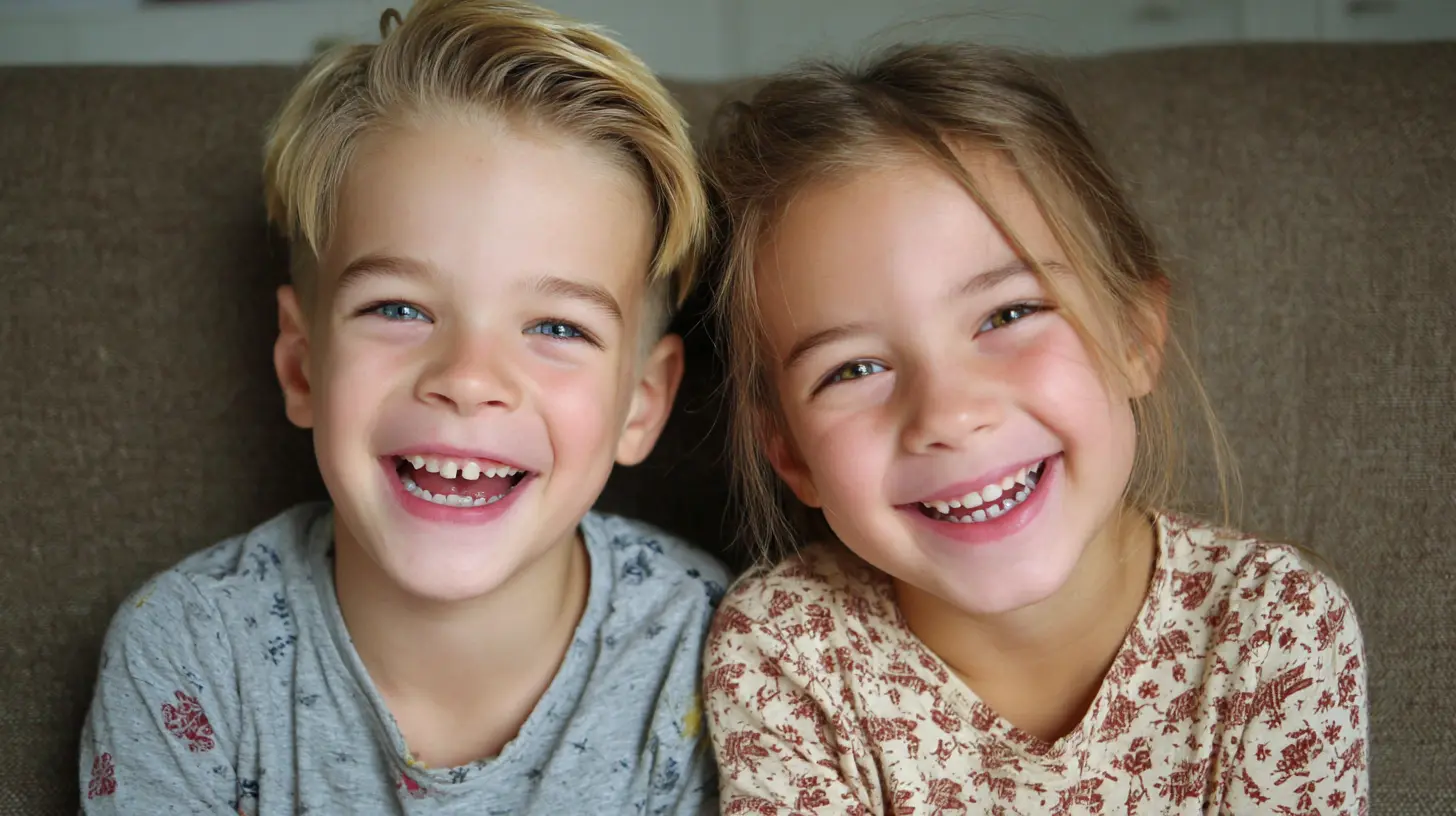
Conflict is an event. Rivalry is a climate. Two siblings who argue over a toy and then play together ten minutes later are experiencing conflict. Two siblings who keep score of every gift, every compliment, and every privilege are living in rivalry. The first is a normal part of learning to share space with another person. The second reflects a deeper belief, held by at least one child, that love and attention are scarce resources that must be won.That belief is the root of the problem. Children do not compete because they are selfish. They compete because they are unsure whether they matter equally. A child who feels securely loved does not need to tally who got the larger slice of cake. A child who feels uncertain does. This is why rivalry often intensifies during transitions such as a new baby, a move, a parental separation, or a period of illness in the family. Anything that makes a child's place feel less certain raises the stakes of competition.
Understanding this changes how you respond. When a child provokes a sibling, the provocation is often a bid for reassurance rather than an act of malice. That does not mean you excuse the behavior. It means you address the need underneath it as well as the behavior itself.
Why Sibling Rivalry Develops
Several forces push siblings toward rivalry, and most of them are outside anyone's control.Temperament differences. Children arrive with different temperaments. One may be slow to warm, another intense and impulsive. Parents naturally find some temperaments easier to parent, and children notice this even when parents try to hide it. A child who requires less intervention may feel invisible, while a child who demands more may feel labeled as the difficult one.
Age and developmental stage. A toddler's possessiveness is developmentally appropriate, not a character flaw. A school-age child's preoccupation with fairness is a normal stage of moral development. Much of what looks like rivalry is simply two children at different stages colliding over the same toy or the same parent.
Scarcity of parental attention. Attention is finite. When a parent is on a phone call, cooking dinner, or caring for an infant, the other children feel the shortage. Rivalry often spikes precisely when parents are least available to mediate.
Comparison by adults. Comparisons between siblings, even flattering ones, create a competitive frame. Telling one child "you are the responsible one" implicitly tells the other they are not. Over time, children internalize these roles and start defending them.
Family stress. Financial pressure, marital tension, and parental exhaustion all lower the threshold for conflict. Children absorb household stress and often express it through the safest available relationship, which is frequently the sibling relationship.
Common Mistakes Parents Make
Most parents make these mistakes without realizing it. Recognizing them is the first step toward change.Forcing equal treatment in every situation
Treating children identically is not the same as treating them fairly. A nine-year-old and a five-year-old should not have the same bedtime, the same chores, or the same screen time. When parents insist on strict equality, they create a scorekeeping culture in which every child monitors whether the other received more. Fairness means giving each child what they need, and children can understand this when it is explained clearly. "Your brother needs help with his reading tonight because he is struggling. Last month I spent extra time with you on your science project. Both are fair." The key is to make the reasoning visible rather than silent.Positioning yourself as a judge
When you ask "who started it?" you invite each child to build a case against the other. You also guarantee that one child will feel defeated and resentful. Unless someone is in physical danger, a trial is rarely useful. Children learn more from being guided toward a solution than from watching a parent deliver a verdict. If you must intervene, focus on the future: "You both want the tablet. What is a plan that works for both of you?" This shifts the energy from blame to problem-solving.Labeling children
Labels such as "the troublemaker," "the sensitive one," or "the easy child" become self-fulfilling. A child labeled difficult may decide there is no point in trying to be otherwise. A child labeled easy may suppress their needs to keep the label. Describe behavior rather than character: "You hit your sister, and that is not acceptable," rather than "you are always aggressive."Ignoring the quieter child
The child who causes less friction often receives less attention, and parents may not notice the imbalance because the household runs smoothly. This quiet child may conclude that only conflict earns notice. Check in deliberately with the child who does not demand it. A short, regular one-on-one conversation can prevent a great deal of resentment.Taking sides reflexively
Many parents side with the younger child out of protectiveness or with the older child out of an expectation that they should know better. Both patterns breed resentment. The younger child learns that distress is a lever; the older child learns that their grievances do not count. Try to stay neutral about fault and firm about behavior.
What Actually Works: Core Practices
The practices below are not quick fixes. They are structural habits that change the emotional climate over months rather than days.Fill each child's emotional cup individually
The single most protective factor against rivalry is each child's private certainty that they are loved for who they are, not in comparison to anyone else. This requires regular one-on-one time, even in small doses. Fifteen minutes of undivided attention, with no phone and no sibling present, does more than hours of distracted togetherness. Let the child choose the activity. The message is not about the activity itself but about the absence of competition during that window.Why this works: rivalry feeds on uncertainty. When a child has a reliable, predictable claim on a parent's attention, the need to compete for it diminishes. The child no longer has to fight for proof of love because the proof arrives on schedule.
Coach rather than rescue
When children argue, your instinct may be to step in immediately. Resist that instinct when the conflict is verbal and not dangerous. Children need practice negotiating, and they need the experience of recovering from a fight without an adult managing every step. Your role is to coach from the sidelines: "You two sound frustrated. I will be in the kitchen. Come tell me when you have a plan." If the argument escalates, step in to stop harmful behavior, not to determine who was right.There is a trade-off here. Stepping back means some conflicts will get louder before they get quieter. If your children are young, impulsive, or prone to physical aggression, closer supervision is necessary. Match your level of involvement to their actual capacity, not to an ideal.
Set up the environment to reduce friction
A surprising share of sibling conflict is about property and space. Two children sharing one desk, one tablet, and one basket of toys will fight more than two children with clear zones and clear ownership. Practical measures include:- Separate storage for special possessions, with a clear rule that a child's special items require permission to borrow.
- Duplicate high-demand items where feasible. Two inexpensive headphones prevent more fights than one expensive set.
- Designated quiet spaces where each child can retreat without being followed.
- A visible schedule for shared screens or devices, so the rule is external rather than imposed in the moment.
These changes do not teach anything on their own, but they remove triggers, and fewer triggers mean fewer rehearsals of the rivalry pattern.
Teach repair, not just apology
Forced apologies are theater. What matters is repair: the act of acknowledging impact and restoring the relationship. After a fight, when everyone is calm, guide children through a short conversation. "What happened? How did each of you feel? What would help make this better?" Younger children may need you to model the language. Older children can often manage it themselves with a prompt. The goal is for children to experience conflict as something that can be resolved rather than something that permanently damages the relationship.Avoid comparison in praise and criticism
Praise the behavior, not the ranking. "You worked hard on that project" is better than "you are so much more careful than your brother." The second sentence delivers a compliment to one child at the cost of the other, and the other child hears it. Comparisons create winners and losers, and in a family, a child who loses a comparison does not simply try harder. They often try to pull the winner down.Protect the sibling relationship from parental venting
It is tempting to confide in one child about the other, especially with older children. Avoid it. Telling a twelve-year-old that their younger sibling is exhausting asks them to hold adult feelings about a peer relationship they cannot control. Keep adult frustrations with adult partners or friends. Children should not be asked to manage a parent's feelings about their sibling.Build shared positive experiences deliberately
Rivalry thrives in competition and weakens in cooperation. Create regular activities where children are on the same team: cooking a meal together, building something, planning a surprise for a parent, or solving a puzzle. Cooperative tasks give siblings a shared identity and a store of positive memories that buffer future conflict. The activities should be genuinely cooperative, not competitive games dressed up as family time. A board game with a single winner can reignite rivalry; a project with a shared outcome builds alliance.Handling Specific Situations
When a new baby arrives
The arrival of a sibling is the classic rivalry trigger. Prepare the older child before the birth with honest, age-appropriate information. After the birth, protect the older child's routines and one-on-one time as much as possible. Let them help with the baby in ways they choose, but do not make help mandatory. Avoid praising the older child primarily for being "a good big sibling." Praise them for being themselves. And expect regression. A child who suddenly wants a bottle or wants to be carried is asking for reassurance, not plotting a takeover. Meet the need briefly and without shaming.When one child is consistently the aggressor
If one child repeatedly instigates conflict, look for the function of the behavior. Are they seeking attention? Avoiding a task? Feeling displaced? Punishment alone rarely changes a pattern that serves a purpose. Address the function: increase positive attention during calm periods, teach alternative ways to ask for connection, and set firm limits on harmful behavior. If aggression is frequent and intense, consider whether the child needs additional support, and consult a pediatrician or child therapist if the pattern persists.When children are far apart in age
Large age gaps reduce direct competition for the same toys and friends, but they create a different dynamic: the older child may be cast as a caretaker, and the younger may be treated as the permanent baby. Give the older child permission to be a child, not a junior parent. Give the younger child age-appropriate responsibilities so they are not perpetually dependent. Both children need to be seen as individuals rather than as members of a hierarchy.When rivalry persists into adolescence
Teen rivalry often centers on privacy, privileges, and differing rules. Explain the reasoning behind different rules rather than defending them as absolute. "Your curfew is later because you have shown you can manage it" is more persuasive than "because I said so." Keep the door open for each teen individually. Sibling relationships in adolescence often cool simply because teens are busy, and that cooling is not necessarily a problem. What matters is that the relationship remains respectful and that no child feels exiled from the family's affection.
What to Expect and What Not to Expect
Parents often ask whether siblings can be close friends. Some can, and some cannot, and both outcomes are acceptable. Siblings are not required to be best friends. They are required to be respectful, and the friendship, when it comes, is a bonus rather than a guarantee. Trying to force closeness can create pressure that backfires.Expect progress to be uneven. A week of relative peace may be followed by a regression. This is normal and does not mean your approach has failed. Look at the trend over months, not the mood over days.
Expect your own triggers to matter. If you grew up with intense sibling conflict, your children's fights may activate old feelings and push you toward overreaction. Noticing this is useful. You do not have to be a perfectly calm parent, but you do need to avoid making your children's relationship a replay of your own.
A Realistic Framework
If you take one idea from this article, make it this: rivalry is a signal about security, not a verdict about your children's character. Your job is not to eliminate conflict but to keep the underlying question, "do I matter here," answered consistently. When that question is settled, children still argue, but they stop keeping score.That means small, repeated actions: regular one-on-one time, visible fairness with clear reasoning, coaching instead of judging, environmental changes that remove triggers, and deliberate cooperative experiences. None of these are dramatic. Together, they change the climate. And a changed climate changes how siblings treat each other, not just in the moment but over the lifetime of their relationship.
all images in this post were generated using AI tools
Category:
Raising Happy KidsAuthor:

Zelda Gill