Virtual Reality Field Trips: Are They Better Than the Real Thing?
11 September 2026
The school bus has long been a symbol of something sacred in childhood. The rumble of the engine, the smell of vinyl seats, the elbow fights over window spots, the teacher counting heads twice before the doors close. A field trip is not just a destination. It is a ritual, a shared memory, a small expedition into the wider world. So when a child straps on a headset and visits the Great Barrier Reef without leaving the classroom, what exactly has been gained, and what has been lost?
This question matters more now than ever. Schools face shrinking budgets, rising transportation costs, safety concerns, and classrooms filled with students whose families cannot afford to supplement what the school provides. Meanwhile, virtual reality has matured from a novelty into a legitimate educational tool. Museums have built digital twins of their halls. Marine biologists have captured 360-degree footage of coral reefs. Space agencies have opened their training simulations to students. The technology is no longer the question. The question is whether it can replace, or even surpass, the muddy, sweaty, wonderful mess of a real field trip.
The honest answer is not a simple yes or no. It depends on what you are trying to teach, who you are teaching, and what you believe education is for. Let us walk through this carefully, because parents and teachers deserve more than a slogan.
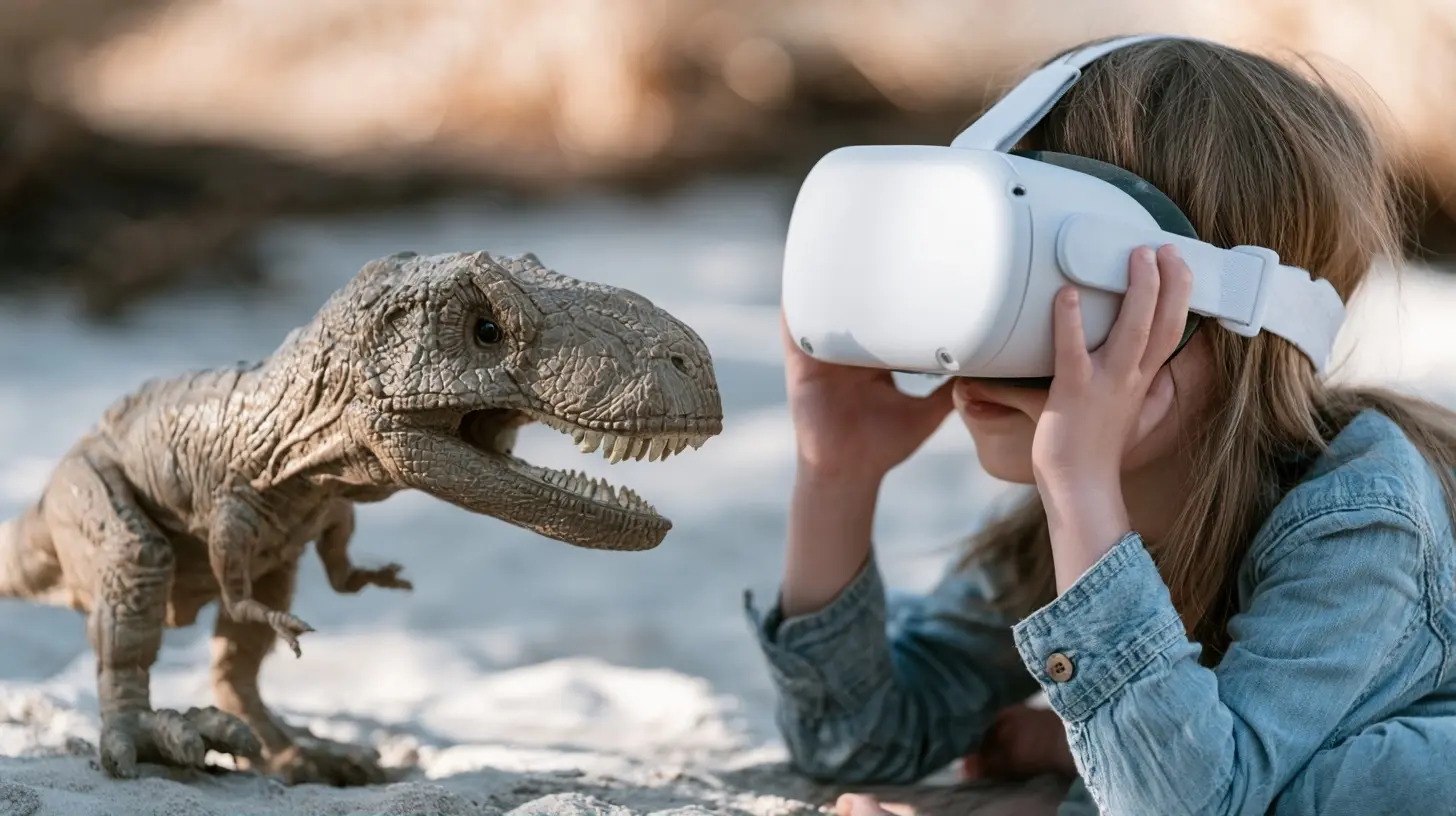
What a Real Field Trip Actually Does
Before comparing virtual to real, we need to understand what a physical field trip accomplishes. It is tempting to reduce it to "seeing things in person," but that undersells it. A real trip works on several layers at once, and each layer has its own educational value.The sensory anchor
When a child touches a fossil, smells the damp air of a cave, or hears the echo of a cathedral, the experience becomes anchored in the body. Memory researchers have long observed that multisensory experiences tend to be recalled more vividly than single-channel ones. The brain tags the moment with texture, temperature, and sound. That richness makes the learning stick.The social fabric
A field trip is a shared social event. Students negotiate, observe each other's reactions, and build a collective story. The kid who was afraid of the dark finds courage because a friend holds her hand. The quiet student asks a question aloud for the first time. These moments do not appear on any worksheet, yet they are often what teachers remember and what students carry forward.The unpredictability
Real environments are uncontrollable. A deer walks onto the trail. A docent tells a story that is not in the script. A sudden rainstorm forces the group to huddle under a pavilion and talk. These unplanned moments often produce the deepest learning because they demand improvisation and genuine curiosity.The civic dimension
A physical trip takes students into public space. They learn how to behave on a bus, in a museum, in a park. They see themselves as members of a community larger than their school. That civic rehearsal is part of the hidden curriculum, and it is difficult to replicate on a screen.Any honest comparison must hold these four dimensions in view. A virtual trip that delivers content but skips the social, sensory, and civic layers is not a replacement. It is a different thing entirely.
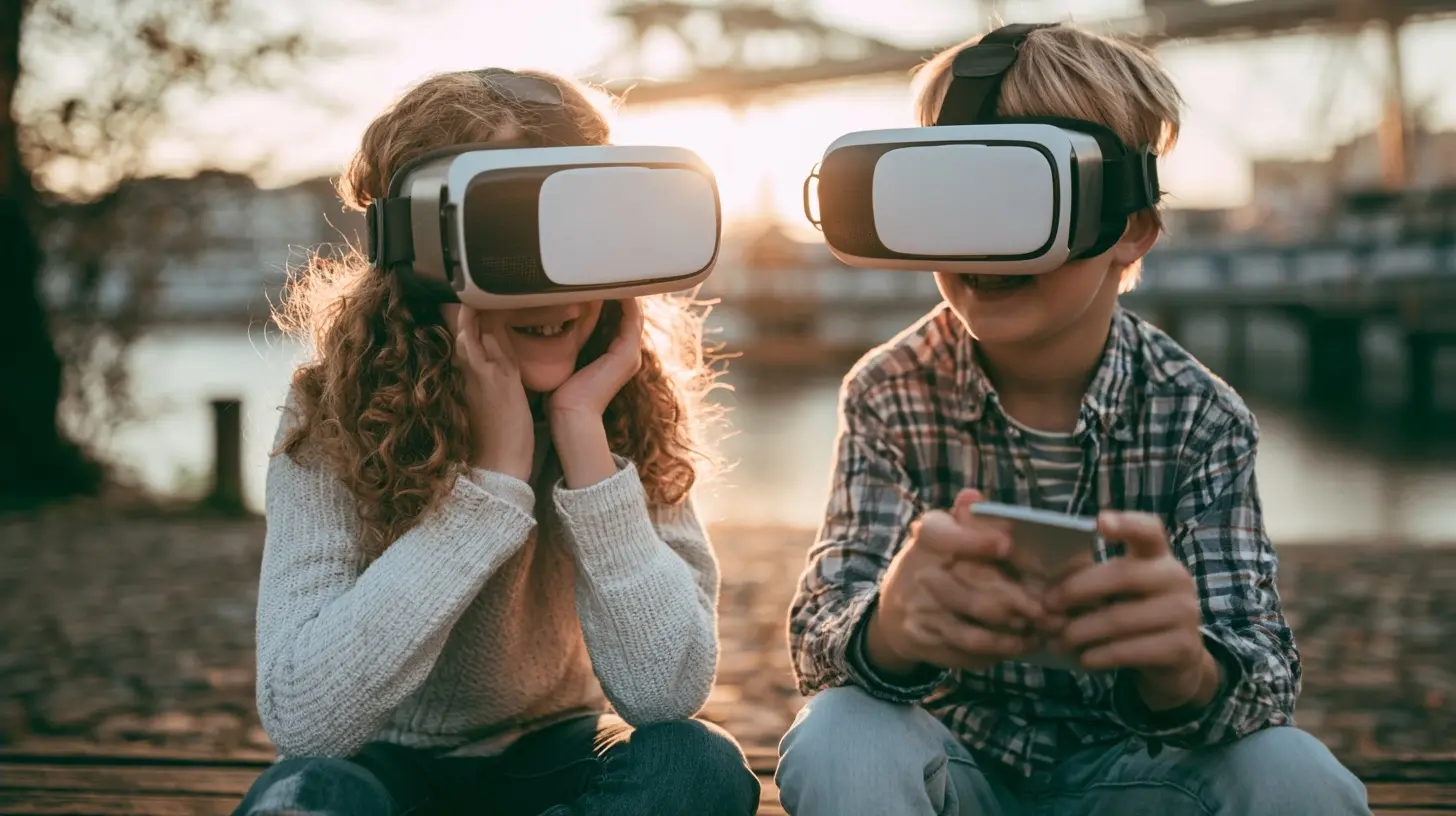
What Virtual Reality Brings to the Table
Now let us give virtual reality its due. Dismissing it as a gimmick is as lazy as treating it as a cure-all. When designed well, VR offers genuine advantages that even the best-funded field trip program cannot match.Access to the inaccessible
A class in rural Kansas cannot visit the Louvre on a Tuesday morning. A class in a landlocked country cannot dive to a coral reef. A class with three students in wheelchairs cannot easily navigate a rugged nature trail. VR removes those barriers. It does not merely substitute for the real thing. It opens doors that were never open at all.Scale and perspective
Some concepts are impossible to grasp at human scale. The inside of a cell, the sweep of a glacier over ten thousand years, the orbit of a satellite. VR can shrink or expand the student to fit the idea. A child can walk through a bloodstream or stand on the surface of Mars. No physical field trip can do that, at any budget.Repeatability and safety
A real field trip happens once. If a student misses the key moment, it is gone. VR can be replayed, paused, and revisited. It can also place students in situations that would be dangerous in reality, such as examining an active volcano or a crime scene. The safety margin is total.Cost per student
Once the hardware exists, the marginal cost of a virtual trip is close to zero. No buses, no permits, no substitute teachers, no lost permission slips. For schools that struggle to fund even one trip per year, VR can multiply opportunities.These are real benefits. They are not marketing claims. They are the reasons why museums, universities, and forward-thinking districts have invested in the technology.
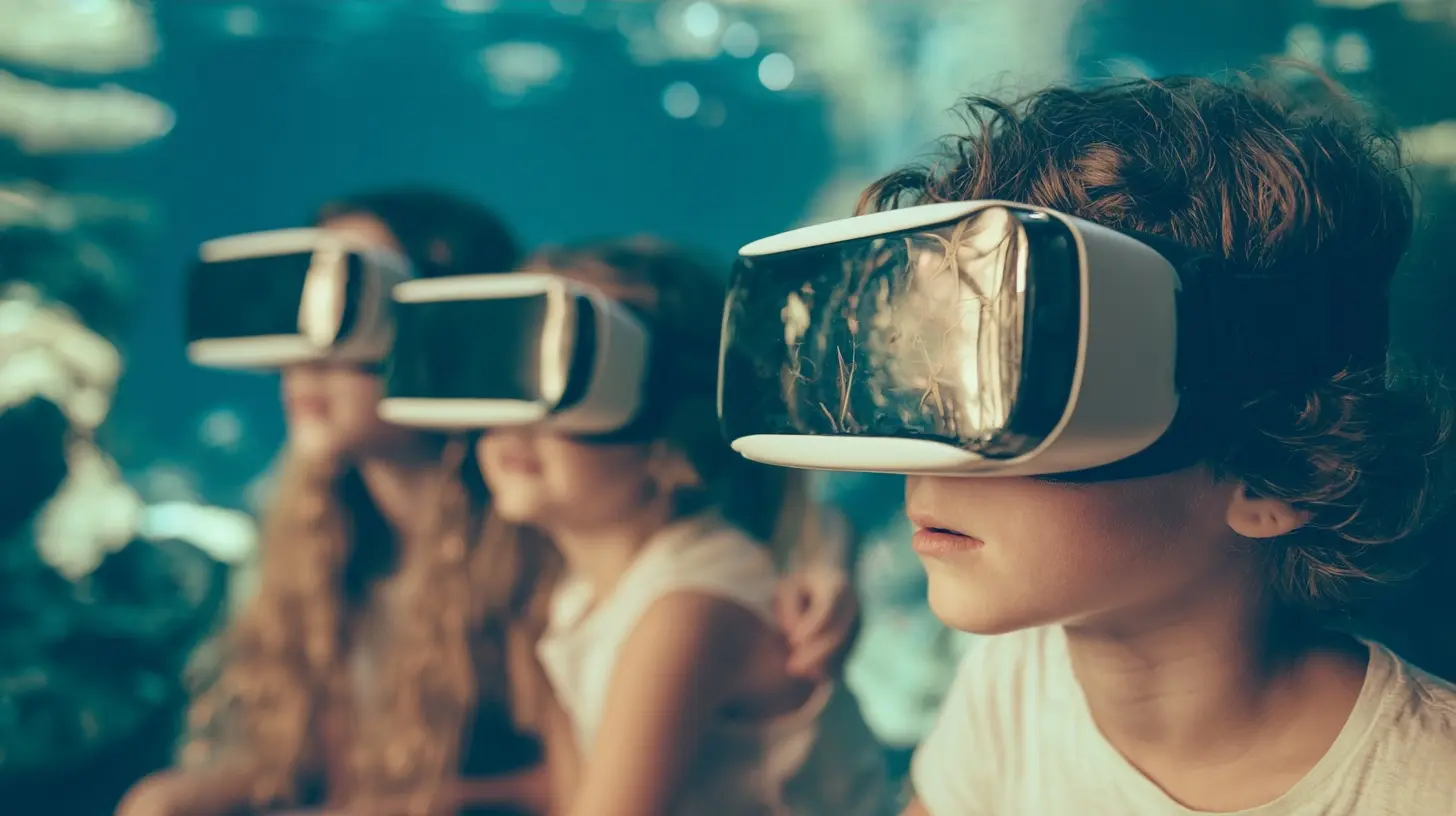
The Case Against Replacing Real With Virtual
If VR is so capable, why not replace field trips entirely? Because the comparison is not apples to apples. It is apples to the entire orchard.The body knows the difference
A student who has "visited" a rainforest through a headset has seen it, but has not felt humidity cling to her skin or heard the crunch of leaves underfoot. The sensory anchor is missing. Some learning survives this. Some does not. For young children especially, whose thinking is still deeply tied to physical experience, the loss is significant.Screens flatten wonder
There is a documented phenomenon in museum studies: people photograph artworks instead of looking at them. The screen becomes a barrier. VR risks the same effect. A student may leave a virtual tour with a checklist of facts but without the quiet awe that a real skeleton or a real painting can provoke. Awe is not a frill. It is a motivator, and it is hard to manufacture.The social layer thins
In VR, students are often isolated in headsets. Even when they share a virtual space, their bodies are still. The negotiation, the whispered joke, the shared gasp are muted. Teachers who have run both kinds of trips often report that the virtual version feels strangely private, even when the whole class is present.The civic rehearsal disappears
A virtual trip does not teach a child how to behave in a public square, how to ask a docent a question, how to navigate a crowd. Those skills matter. They are part of what we mean by education.Equity cuts both ways
VR can democratize access, but it can also create new divides. Schools with resources get high-quality headsets and curated content. Schools without get a laptop and a YouTube video. The technology does not automatically level the field. It can widen it if we are not careful.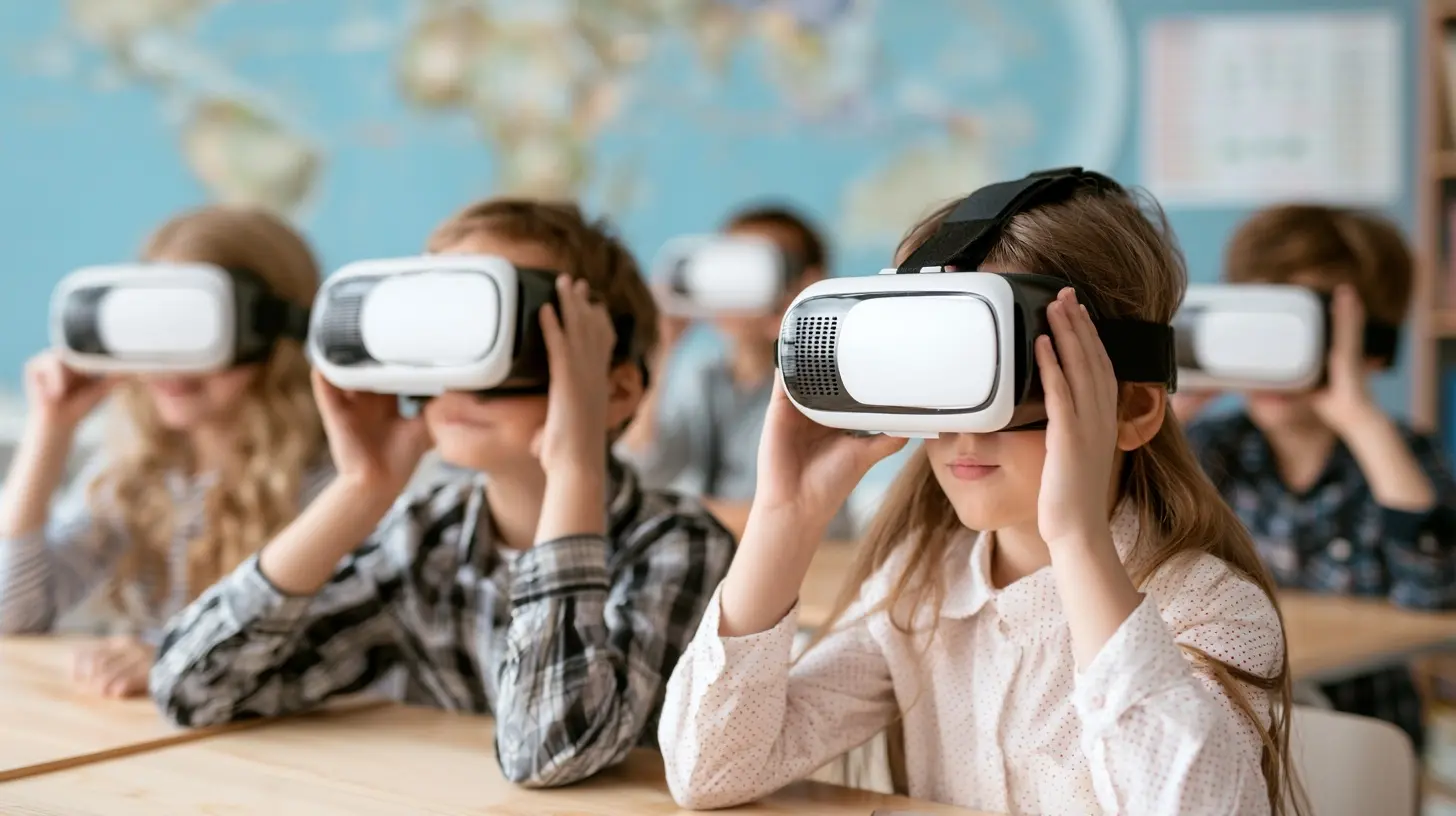
The Real Question: What Are You Trying to Teach?
The debate over virtual versus real field trips often stalls because people argue about the medium instead of the objective. A better approach is to ask what specific learning outcome you are chasing.When virtual wins
- Teaching abstract or invisible concepts: cell biology, orbital mechanics, geological time.- Reaching places that are physically impossible to visit: deep ocean, active volcanoes, the past.
- Serving students with mobility, sensory, or health constraints.
- Providing repeated practice in a safe environment: lab procedures, emergency response.
- Stretching a tiny budget across many experiences.
When real wins
- Building sensory memory and embodied knowledge.- Teaching social and civic skills.
- Fostering awe and long-term curiosity.
- Introducing students to the texture of the natural world.
- Creating shared class identity and tradition.
When both together win
The most powerful model is not either-or. It is sequencing. Use VR to prepare students before a real trip, so they arrive with context and questions. Use VR to extend the trip afterward, so they can revisit what they saw and go deeper. Use a real trip to anchor the emotional memory, and VR to fill in the details that a single afternoon could not cover.This blended approach respects the strengths of each medium. It also mirrors how professionals actually work. A geologist studies maps and satellite imagery before going into the field, then returns to the lab to analyze samples. The field and the screen are partners, not rivals.
Common Mistakes Parents and Teachers Make
Even with good intentions, virtual field trips often go wrong. Here are the pitfalls I see most often, and how to avoid them.Treating VR as a babysitter
Putting thirty students in headsets and walking away is not teaching. VR requires active facilitation. Someone must ask questions, connect the experience to the curriculum, and help students process what they saw. Without that, the trip becomes entertainment, and entertainment fades.Skipping the debrief
The most important part of any field trip, real or virtual, is what happens after. A structured conversation, a writing prompt, a drawing, a debate. Without reflection, the experience stays shallow. This is true for the real thing too, but it is easier to forget when the trip felt effortless.Ignoring physical comfort
Headsets can cause motion sickness, eye strain, and neck fatigue. Sessions should be short, especially for younger students. Breaks matter. So does hygiene, since shared headsets are shared germs.Assuming all VR is equal
A 360-degree video is not the same as an interactive simulation. A phone-based cardboard viewer is not the same as a room-scale headset. The quality of the experience varies enormously, and so does its educational value. Choose the tool to match the goal, not the other way around.Forgetting the why
The worst mistake is using VR because it is exciting, not because it serves a purpose. Technology should follow pedagogy, never lead it. If a book, a conversation, or a walk around the block would teach the same thing better, use that instead.
A Practical Framework for Decision-Making
When you are planning a learning experience, real or virtual, run through these questions.1. What is the specific learning goal? Write it in one sentence.
2. Does this goal require physical presence, social interaction, or sensory input? If yes, lean real.
3. Does it require access to the impossible, the invisible, or the dangerous? If yes, lean virtual.
4. What is the budget, the time, and the logistics? Be honest.
5. Can the two be combined for a stronger result?
6. How will you prepare students before and debrief them after?
7. What will you do if the technology fails? Always have a backup.
This framework will not give you a universal answer, because there is none. It will give you a defensible one.
What the Future Might Hold
It is worth imagining where this is going, without pretending to know for certain. Haptic gloves may one day let students feel the weight of a Roman coin or the rough surface of a meteorite. Shared virtual spaces may let classrooms in different countries meet inside a reconstructed historical site. Augmented reality may overlay information onto real field trips, so that a walk through a park becomes a layered lesson in ecology, history, and geology at once.But no technology will change the fundamental truth of childhood: children learn best when they are engaged, when they feel something, and when the experience connects to a person who cares about them. A headset cannot replace a teacher's question. A simulation cannot replace a friend's laughter. The screen is a tool. The relationship is the classroom.
A Balanced Verdict
So, are virtual reality field trips better than the real thing? No, not better. Different. And often complementary.A real field trip gives children something no machine can: the memory of being somewhere, together, in the weather, with all their senses awake. That memory becomes a foundation for years of learning. Virtual reality gives children something a school bus cannot: access to the far, the small, the deep, the past, the impossible. Used wisely, it expands the world rather than replacing it.
The best schools will not choose one over the other. They will use each for what it does well, and they will never forget that the point is not the technology or the trip. The point is the child, standing at the edge of something new, with a question forming in her mind.
That question is the real destination. How we get her there matters less than whether she arrives.
all images in this post were generated using AI tools
Category:
Parenting And TechnologyAuthor:
Zelda Gill
Discussion
rate this article
2 comments
Annabelle McQuade
Virtual reality field trips: great for seeing the Eiffel Tower without the risk of stepping in gum or losing your kid in a crowd. Just don't forget to take off the headset when it's snack time!
September 16, 2026 at 4:00 AM
Zelda Gill
Great point! VR does make exploring easier, but nothing beats the real experience-snack time is part of the adventure too!
Kristen Wyatt
I love the idea of virtual field trips! It's a great way to explore without the hassle.
September 15, 2026 at 4:23 PM