The Secrets to Nurturing a Joyful Home Environment
30 August 2026
Every parent wants a home that feels warm, safe, and full of laughter. But joy is not something you can force or fake. It is not about having a perfectly decorated living room or children who never argue. A joyful home is built on a foundation of emotional safety, genuine connection, and intentional daily habits. It is less about what you have and more about how you show up for each other.
The good news is that joy is not a personality trait you are born with. It is a skill you can cultivate. And the home is the best place to start because it is where your children learn what love feels like. This article walks through the real, practical, and sometimes counterintuitive ways to create an environment where joy can thrive.

Redefining Joy: It Is Not Constant Happiness
Before diving into strategies, it is crucial to clear up a common misconception. Joy is not the same as happiness. Happiness is often tied to circumstances. A child is happy when they get a new toy or win a game. Joy is deeper. It is a sense of contentment and belonging that exists even when things are hard.A joyful home does not mean everyone is smiling all the time. It means that when someone is sad, angry, or frustrated, they are still met with love. It means that conflict is not the enemy. In fact, conflict handled well can be one of the most powerful tools for building joy because it teaches children that relationships can survive disagreement.
Think of joy as the background music of your home. It is not always loud, but it is always there. When you stop chasing constant happiness and start focusing on connection, the pressure lifts. Your children will feel the difference. They will stop performing for you and start being themselves.
The Foundation: Emotional Safety Comes First
You cannot have joy without safety. This is not about physical safety alone, though that matters. It is about emotional safety. A child needs to know that they can express their feelings without being shamed, punished, or dismissed.When your child says, "I hate my brother," do you correct them immediately? Do you say, "No you do not, you love your brother"? If you do, you are accidentally teaching them that their feelings are wrong. That is the opposite of emotional safety. A better response is, "You are really angry with your brother right now. What happened?" This validates their emotion while still leaving room to address the behavior later.
Emotional safety also means that your love is not conditional on good behavior. Many parents fall into the trap of giving affection when children are easy and withdrawing it when they are difficult. This creates anxiety. Children begin to think, "If I make a mistake, I lose my place in this family." That is a recipe for fear, not joy.
To build emotional safety, apologize when you are wrong. This is one of the most underrated parenting tools. When you lose your temper and yell, go back to your child and say, "I am sorry I yelled. I was frustrated, but it is not okay for me to speak to you that way." This models humility and repair. It shows your child that mistakes are not the end of the world. They are opportunities to reconnect.

The Rhythm of Rituals: Why Predictability Creates Freedom
Children thrive on predictability. It might seem boring to eat the same breakfast every day or have the same bedtime routine, but that sameness is actually a gift. Rituals tell a child, "You are safe. You know what comes next." This reduces anxiety and frees up mental energy for creativity and play.The secret is not to have a rigid schedule. It is to have meaningful rituals. These can be small. A special handshake before school. A silly song while brushing teeth. A Sunday afternoon walk. A Friday night pizza and board game tradition. The content does not matter as much as the consistency.
When you create rituals, you are building a bank of shared memories. Years from now, your children will not remember the exact date of a school project. They will remember the way you always made pancakes on Saturday morning. They will remember the sound of your voice reading a bedtime story. These are the threads that weave a family together.
One common mistake is trying to make every moment special. This backfires. When everything is a big event, nothing feels special. The ordinary moments become dull because you are always waiting for the next highlight. Instead, let most days be simple and calm. Let the rituals be the anchors, and let spontaneity be the spice.

The Power of Play: Not Just for Kids
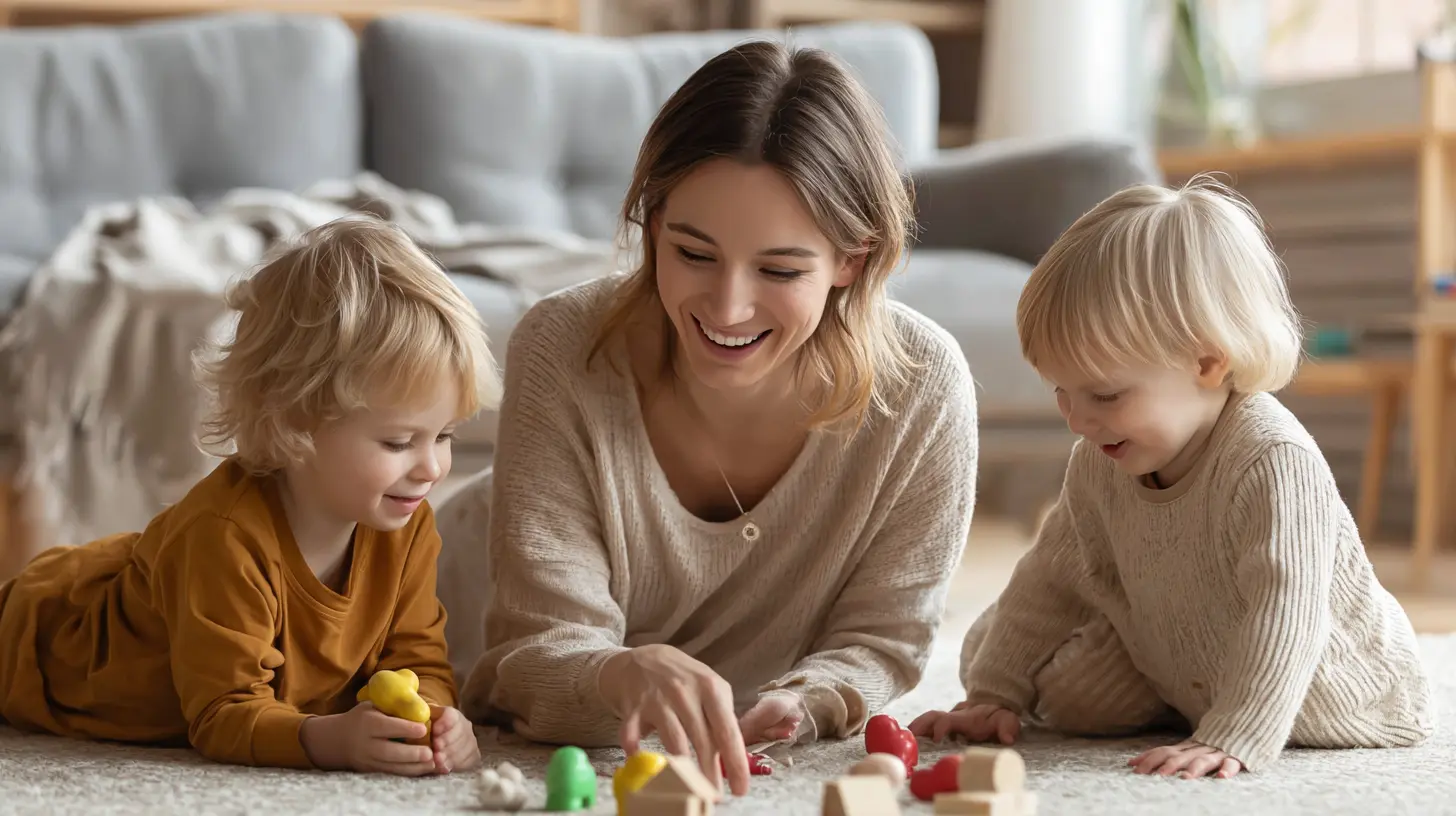
Play is often seen as something children do to pass the time. But play is actually the primary way children learn about the world and about themselves. It is also one of the most effective ways to build a joyful home.When you play with your child, you are not just entertaining them. You are saying, "I value being with you. I am willing to enter your world." This is deeply affirming. It tells a child that they are interesting and worthy of your attention.
You do not need to be a fun parent who is always inventing elaborate games. Simple play works. Building a fort out of cushions. Playing catch in the backyard. Doing a puzzle together. The key is to let your child lead. Let them set the rules. Let them be the boss. This gives them a sense of control that is often missing in their lives.
Play also has a healing effect. When a child has had a hard day at school, they often do not want to talk about it. They want to play it out. A child who is feeling powerless might play a game where they are the superhero. A child who is feeling anxious might line up their toys in a careful row. By allowing this, you are giving them a safe outlet for their emotions.
The trade-off here is time and energy. Play is exhausting for adults. You might feel like you do not have the bandwidth after a long day of work. But even ten minutes of focused, playful attention can do more for your child's sense of joy than an hour of having them sit quietly while you watch TV. Quality beats quantity every time.
Communication That Connects, Not Just Talks
Most parents talk to their children all day. We give instructions, reminders, and corrections. But how often do we actually communicate in a way that builds connection? There is a big difference between talking at a child and talking with them.One of the most powerful communication tools is asking open-ended questions. Instead of, "Did you have a good day at school?" which gets a one-word answer, try, "What was the best part of your day?" or "What was something funny that happened?" These questions invite your child to think and share. They also signal that you are genuinely interested in their life.
Another important tool is reflective listening. This means repeating back what your child said in your own words. If your child says, "I am so mad at my friend," you might say, "It sounds like your friend did something that really upset you." This does not solve the problem, but it makes your child feel heard. And feeling heard is the first step to feeling loved.
A common mistake parents make is jumping to problem-solving too quickly. When your child is upset, your instinct is to fix it. But often, your child does not want a solution. They want validation. If you rush to fix, they might feel that their feelings are a burden. Instead, sit with them in the feeling first. Ask, "Do you want me to help you figure it out, or do you just need me to listen?" This gives them agency and shows respect.
The Role of Autonomy: Letting Go to Bring Them Closer
It might sound strange, but giving your children more freedom can actually make your home more joyful. When children feel that they have some control over their lives, they are less likely to fight for it. Power struggles often happen because children feel suffocated.Start small. Let your toddler choose between two shirts. Let your elementary schooler decide what to pack for lunch. Let your teenager manage their own homework schedule, even if they make mistakes. The goal is not to abandon them. It is to show that you trust them.
The trade-off is that they will make choices you do not like. They might wear mismatched clothes or forget their homework. But these small failures are how they learn. If you constantly step in to prevent mistakes, you are sending a message that you do not believe they are capable. That belief becomes a self-fulfilling prophecy.
A useful framework is to ask yourself, "Is this a safety issue or a preference issue?" If it is only about preference, let it go. Let them wear the superhero cape to the grocery store. Let them eat their sandwich in the wrong order. These battles are not worth the erosion of joy that comes from constant nagging.
Managing Your Own Emotions: The Parent as the Anchor
Here is a hard truth: your children are not the source of your joy or your stress. They can trigger you, but they do not create your inner state. You are responsible for your own emotional regulation. And when you regulate yourself, you give your children a model to follow.In a joyful home, the parent is like the anchor of a ship. When the storms come, the anchor holds steady. If you are calm, your children can find their calm. If you are reactive, the whole house feels chaotic.
This does not mean you have to be perfect. It means you need to be aware of your own triggers. Do you get angry when your child spills something? Do you feel anxious when they cry in public? These reactions often come from your own childhood. When you can recognize that, you can start to change your response.
A practical tool is the pause. Before you react, take three deep breaths. This sounds simple, but it is incredibly powerful. It interrupts the automatic fight-or-flight response and gives your brain a moment to choose a wiser response. You can even say out loud, "I need a minute to calm down." This teaches your child that big feelings are manageable.
Another important practice is taking care of yourself. You cannot pour from an empty cup. If you are exhausted, resentful, or burned out, your home will reflect that. Make time for your own interests. Sleep enough. Ask for help when you need it. A joyful home is built on the well-being of everyone in it, including you.
The Danger of Comparison: Your Home Is Not Their Home
One of the fastest ways to kill joy in your home is to compare it to others. Maybe you see a family on social media with perfectly behaved children and a spotless house. Maybe you hear about a friend whose kids never throw tantrums. Comparison is a thief. It makes you feel inadequate, and that feeling leaks into your parenting.The truth is that every family is different. What works for one household might be a disaster for another. Your child has a unique temperament. Your family has its own history, culture, and challenges. The goal is not to replicate someone else's joy. It is to find what works for your specific group of people.
A better approach is to define your own family values. What matters to you? Is it kindness? Honesty? Creativity? Adventure? Write these down and use them as a guide. When you are making decisions about schedules, discipline, or activities, ask, "Does this align with our values?" This gives you a compass that is not influenced by the neighbors or the internet.
Practical Routines That Support Joy
While joy is an inner state, it is supported by outer structures. Certain routines make joy more likely to appear. Here are some that are worth considering.First, protect family meals. Eating together even a few times a week has a powerful effect on children. It is not about the food. It is about the time to talk and listen. Turn off the TV. Put away the phones. This is a time to connect.
Second, have a consistent bedtime. Sleep is foundational to emotional regulation. A tired child is a cranky child. A tired parent is a cranky parent. Protecting sleep is one of the most loving things you can do for your family.
Third, build in transition times. Children often struggle with switching from one activity to another. Giving a five-minute warning before leaving the park can prevent a meltdown. This is not about being rigid. It is about being respectful of your child's internal clock.
Fourth, create space for downtime. Not every minute needs to be scheduled. Boredom is actually good for children. It forces them to use their imagination. A home that allows for lazy afternoons is a home where creativity can bloom.
Common Mistakes That Quietly Undermine Joy
Even well-meaning parents make mistakes that erode joy. Here are some of the most common ones to watch for.Over-scheduling is a big one. When children are shuttled from soccer to piano to tutoring, they become stressed. They do not have time to just be. The joy of childhood is in the unstructured moments. If your family calendar is packed, consider cutting back. You might face resistance at first, but your children will eventually thank you for the breathing room.
Another mistake is using rewards as the main motivation. If you constantly bribe your child with treats or screen time for good behavior, they learn to behave only for the reward. This undermines intrinsic motivation. Instead, try to praise the effort and the character. Say things like, "I noticed you shared your toy with your sister. That was very kind." This builds internal pride rather than external dependency.
Perfectionism is another joy killer. If you demand that everything be done the "right" way, you create a home where children are afraid to try. Let the beds be messy. Let the drawings be lopsided. The mess is a sign of life. A sterile home is often a home where children are walking on eggshells.
The Long Game: Joy Is Built Over Years
It is easy to get caught up in the daily grind and wonder if any of this is working. You might have a terrible morning where everyone is crying and you are late for school. You might wonder if you are failing. But joy is not built in a single day. It is built in thousands of small moments over many years.Think of it like a savings account. Every time you respond with patience, you make a deposit. Every time you apologize, you make a deposit. Every time you play with your child, you make a deposit. And every time you yell, you make a withdrawal. The goal is not to never make withdrawals. The goal is to have a healthy balance overall.
There will be seasons that are harder than others. The newborn stage is exhausting. The teenage years can be confusing. But the principles remain the same. Connection, safety, and respect are always the foundation.
One final thought: your home does not need to be perfect to be joyful. In fact, the most joyful homes are often the most human. They have dirty dishes in the sink and laughter in the kitchen. They have disagreements that end in hugs. They have parents who are trying their best and children who know they are loved. That is the real secret. Joy is not a destination. It is a way of being together.
all images in this post were generated using AI tools
Category:
Raising Happy KidsAuthor:

Zelda Gill
Discussion
rate this article
2 comments
Patience Underwood
Creating a joyful home is a beautiful journey. Every moment spent nurturing love and understanding shapes a child's world. Remember, it's okay to have tough days. Embrace those challenges with patience and kindness, and celebrate the little joys along the way. You are doing an amazing job. Keep shining.
September 2, 2026 at 2:46 AM
Zelda Gill
Thank you for your kind words. Embracing both the challenges and joys really makes the journey special. Let's keep spreading positivity at home.
Fletcher Shaffer
Ah, the secrets to a joyful home. Step one: maintain a steady supply of snacks; they're basically toddler currency. Step two: embrace the chaos. If you can't find the remote, it might be in the fort made of couch cushions... or under a mountain of laundry. Happy parenting!
September 1, 2026 at 4:35 AM
Zelda Gill
Absolutely! Snacks and a little chaos definitely keep the joy flowing. Those forts are where the magic happens!