The Role of Wearable Tech in Child Safety
14 September 2026
The first time my daughter walked to a friend's house alone, I did what a lot of parents do now. I opened an app, watched a small dot move along a map, and pretended I was not staring at it. The dot arrived. I exhaled. Then I wondered whether the whole exercise had made her safer or just made me feel safer.
That question sits at the center of every conversation about wearable technology and child safety. The devices are everywhere now. Smartwatches for eight year olds. GPS trackers clipped to backpack straps. Kid-focused phones with location sharing baked in. The marketing promises peace of mind. The reality is more complicated, and it depends heavily on the age of the child, the specific tool, and what problem you are actually trying to solve.
This article is not a buyer's guide to any particular brand. It is a framework for thinking about when wearable tech helps, when it quietly backfires, and how to use it without turning your family into a surveillance operation.
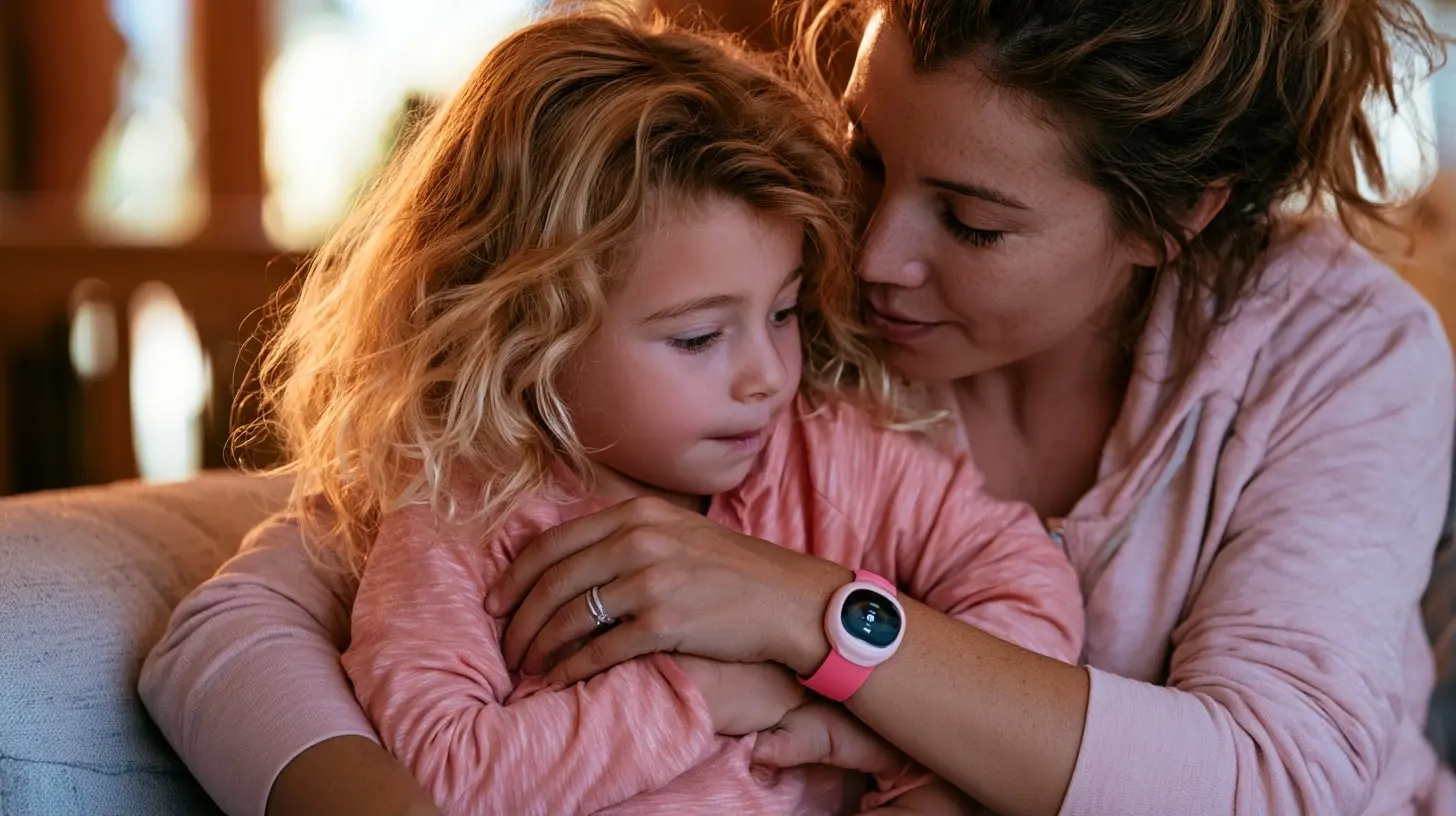
What Counts as Wearable Tech for Kids
The category is broader than most parents realize. It includes:- GPS-enabled smartwatches designed for children, often with calling and messaging limited to approved contacts
- Location-sharing apps on phones that kids carry in pockets or bags, which are wearable in a loose sense
- Dedicated GPS trackers that clip to clothing, belts, or backpack straps
- Bluetooth trackers meant for finding lost items, sometimes repurposed for kids
- Fitness and sleep bands that also transmit location or activity data
Each of these does something different. A GPS smartwatch is a communication device with a location feature. A dedicated tracker is a location device with almost no communication. A fitness band is a health device that happens to know where it is. Parents often lump them together, then get frustrated when a device does not do a job it was never built for.
The first practical step is to name the problem you want solved. Is it "I want to reach my child in an emergency"? Is it "I want to know they got to school"? Is it "I want a record of where they were if something goes wrong"? Those are three different problems, and they call for three different tools.
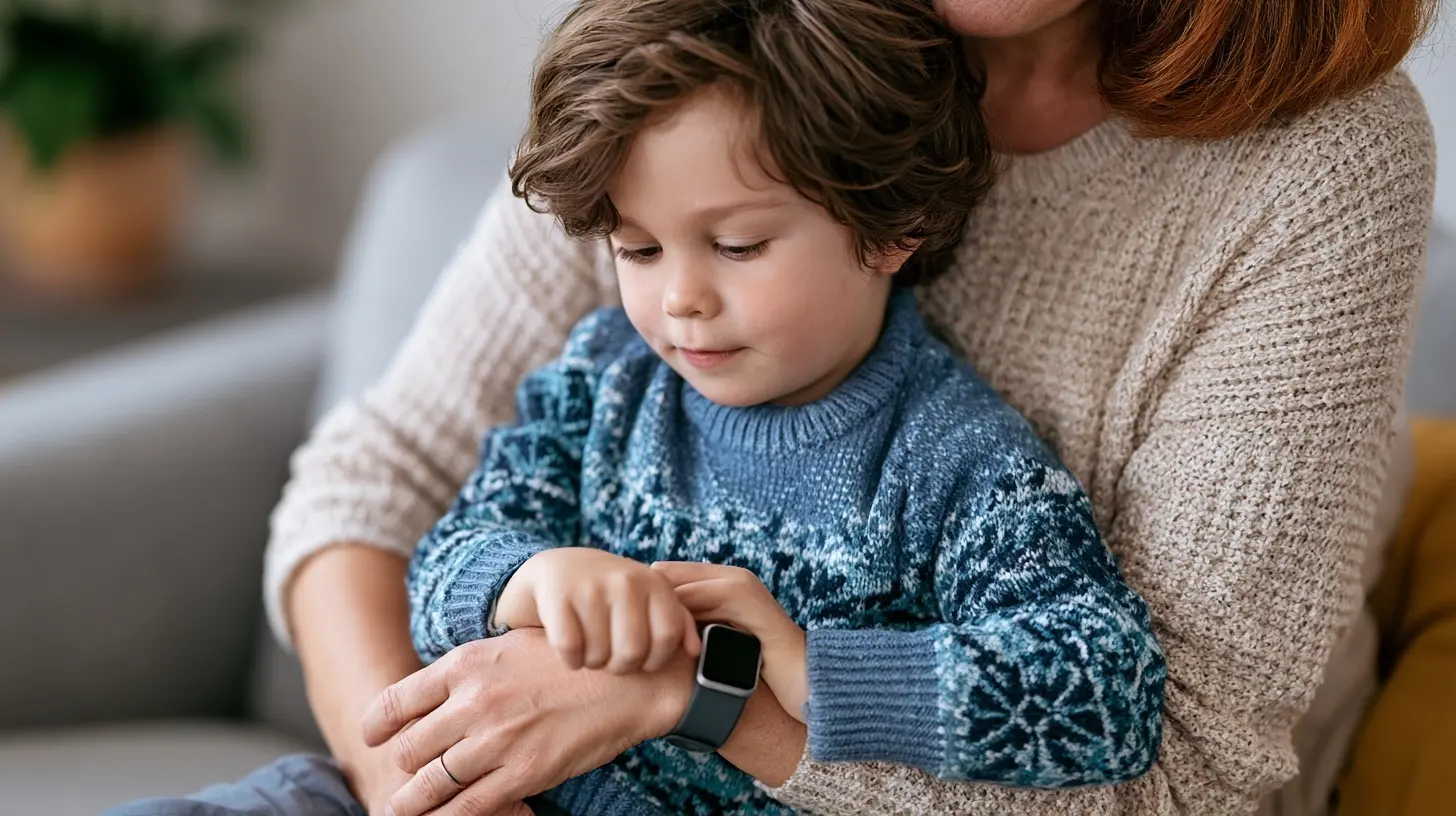
The Real Safety Problems Wearables Can Address
It helps to separate genuine safety functions from comfort functions, because the two get tangled together constantly.Emergency contact and two-way communication
A child who can call a parent from a wristwatch has a real safety advantage in specific situations. If they get separated from you at a crowded event, if a bus is late, if a stranger makes them uncomfortable, the ability to reach a known adult matters. This is the strongest argument for kid smartwatches, and it is the one most parents actually experience as useful.Location awareness during transitions
The most dangerous moments for children are usually transitions. The walk to school. The bike ride to practice. The gap between the end of an activity and pickup. These are the windows when a parent's mind wanders, and they are also when location tracking provides concrete value. Knowing a child left school at 3:15 and arrived home at 3:32 answers a question that would otherwise generate an hour of anxiety.Wandering and elopement
For families with a child who has autism or another condition that causes wandering, GPS wearables are not a luxury. They are closer to a medical necessity. A child who bolts from the house or slips away in a parking lot can be found in minutes instead of hours. This is the single clearest use case, and it is where the technology has done the most measurable good.Medical monitoring
Some wearables track heart rate, sleep, or seizure-related movement. For children with specific diagnoses, this data can be genuinely useful to caregivers and doctors. For healthy kids, it is mostly noise dressed up as insight.Notice what is not on this list. Wearables do not prevent abductions by strangers, which are extraordinarily rare and almost never happen the way parents imagine. They do not stop accidents. They do not make a child more responsible. They provide information and a communication channel. That is it. That is still valuable, but it is worth being honest about the scope.

How These Devices Actually Work
Most kid-focused GPS wearables combine three technologies:GPS satellites for outdoor positioning, accurate to within a few meters under open sky.
Cellular or Wi-Fi networks for transmitting that location to a parent's phone and for voice calls.
Bluetooth or proximity sensors for short-range alerts, like warning you when a child moves too far from a paired device.
The weaknesses follow directly from the strengths. GPS signals struggle indoors, in dense cities, and in parking garages. Cellular coverage has dead zones. Battery life is a constant compromise: more frequent location updates mean more charging. A watch that pings its location every thirty seconds might last a day. One that pings every ten minutes might last several days.
This is why "real-time tracking" is usually a slight exaggeration. What you get is near-real-time, with a delay that can range from seconds to minutes depending on settings and signal. For most parents, that is fine. For a parent watching a child walk through a sketchy area, a two-minute lag can feel like forever.
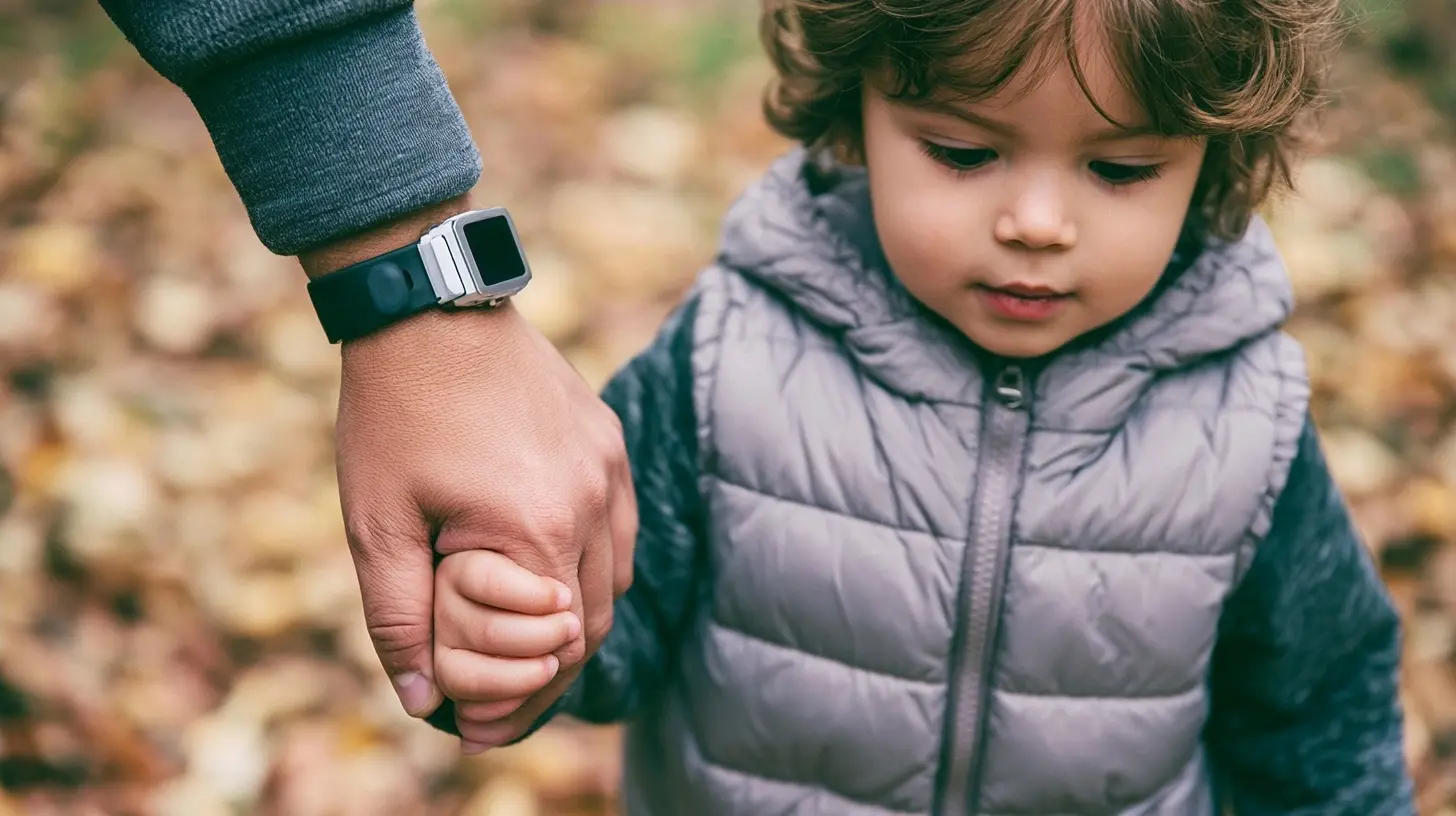
The Case for Wearables, Made Carefully
When wearables work, they work because they solve a specific, bounded problem. A few examples that hold up.A nine year old walks six blocks to school in a quiet neighborhood. She wears a watch that can call her parents and shares her location. The parents check the map only when she is late. The watch gives her a way to reach help and gives them a way to confirm she is moving. Nobody is watching a screen all afternoon.
A twelve year old with epilepsy wears a band that alerts his parents if his heart rate spikes in a pattern associated with seizures. The band is not a substitute for medical care. It is an extra set of eyes at night.
A six year old with autism wears a GPS clip on his belt. His parents know that if he slips out the back door, they can find him before he reaches the street.
In each case, the device addresses a named risk. The parents are not using it to monitor everything. They are using it to close a specific gap.
The Case Against, Also Made Carefully
The same technology creates problems that are easy to overlook.False confidence
A parent who tracks a child may feel safer than they are. The dot on the map shows where the child is, not whether they are in danger. A child can be exactly where they are supposed to be and still be hurt, scared, or in trouble. Tracking is not supervision. It is a supplement to it.Erosion of trust
Children who know they are being tracked sometimes feel mistrusted, and they are not wrong to feel that way if the tracking is secretive or excessive. A teenager whose every movement is logged may learn to leave the phone at a friend's house or find other workarounds. The technology can create a cat-and-mouse dynamic that damages the relationship it was supposed to protect.Privacy and data concerns
Location data is sensitive. It reveals routines, friendships, medical appointments, and more. When you buy a wearable, you are trusting a company with your child's location history. Some companies handle this well. Others have been caught selling data, suffering breaches, or changing privacy policies after purchase. Read the policy before you buy, and check whether the company has a track record of keeping its promises.Battery anxiety and device dependence
A dead battery turns a safety tool into a bracelet. Kids forget to charge things. They lose them. They break them. A wearable that is not worn provides zero protection, and a parent who has come to rely on it may not notice it is offline until they need it.The chilling effect on independence
This is the subtle one. Children develop judgment by navigating the world with gradually increasing freedom. A child who is always tracked may get fewer chances to make decisions, recover from mistakes, and build the internal compass that keeps them safe when no one is watching. There is a real trade-off between the safety you can measure and the competence you cannot.
Matching the Tool to the Age
Age is the single biggest factor in whether a wearable makes sense.Ages 4 to 7. Children this age are rarely unsupervised, so tracking is mostly about wandering and emergencies. A simple GPS clip or a basic watch with calling to a short list of contacts can work. Do not expect the child to manage charging or understand the device. The parent owns the technology entirely.
Ages 8 to 11. This is the sweet spot for kid smartwatches. Children are starting to move independently, they can handle basic device care, and they still accept parental oversight without much friction. A watch with calling, location sharing, and a small approved contact list covers most needs.
Ages 12 to 14. The calculus shifts. Kids this age want phones, and phones do most of what watches do, often better. Location sharing through a phone app is usually a better fit than a dedicated wearable, provided the child agrees to it. The conversation about why matters more than the device.
Ages 15 and up. At this point, tracking without consent is a recipe for conflict. If a teenager agrees to share location, that is a negotiated arrangement, not surveillance. Many families land on a simple rule: location sharing stays on as long as everyone respects it, and it comes off when trust breaks down in either direction.
Features That Matter and Features That Do Not
Marketing pages are full of features. Most of them do not affect safety in any meaningful way.Worth paying for:
- Reliable two-way calling to a limited contact list
- Accurate location with reasonable update frequency
- Geofencing alerts, which notify you when a child enters or leaves a defined area
- Sturdy build and water resistance, because kids are kids
- Clear privacy policy and a company that does not sell data
- Decent battery life with honest estimates
Mostly noise:
- Step counters and fitness gamification
- "AI-powered" safety insights that amount to generic tips
- Social features that let kids message strangers
- Cameras and microphones, which raise privacy issues without adding much safety
- Subscription tiers that lock basic features behind a paywall
A watch that does three things well beats a watch that does twenty things poorly.
Common Mistakes Parents Make
A few patterns show up again and again.Buying the device before defining the problem. Parents see a cool gadget, buy it, then try to figure out what it is for. Start with the risk, then pick the tool.
Tracking without telling the child. Secrecy tends to backfire. A child who finds out later feels betrayed, and the trust damage lasts longer than any safety benefit. Tell them what the device does, why you want it, and what you will and will not do with the information.
Checking the app constantly. A parent who refreshes the map every five minutes is not gaining safety. They are feeding anxiety. Set alerts for the moments that matter and otherwise leave it alone.
Ignoring the data policy. A cheap tracker with a vague privacy policy is a bad deal at any price. Your child's location history is not something to hand over casually.
Treating the device as a substitute for conversation. The most important safety tool is a child who knows how to reach you, who feels comfortable telling you when something is wrong, and who has practiced what to do in common situations. No watch replaces that.
Best Practices That Actually Help
If you decide a wearable makes sense for your family, a few habits make it work better.Set it up together. Walk through the device with your child. Show them how to call you. Let them test it. A device they understand is a device they will use correctly under stress.
Define the rules in advance. When will you check location? When will you not? What happens if the device is left at home? Write it down if that helps. Ambiguity breeds conflict.
Use geofences instead of constant monitoring. Set alerts for arrival at school, arrival home, and departure from either. Then stop looking. You get the information you need without the surveillance creep.
Charge it on a routine. Pick a time, like during dinner or homework, when the device goes on the charger. A dead battery is the most common failure mode.
Revisit the arrangement every few months. What worked at nine may not work at eleven. As kids earn trust, loosen the reins. If trust breaks down, tighten them, but explain why.
Keep a low-tech backup. A written phone number in a backpack. A family password for emergencies. A plan for what to do if the device fails. Technology is a layer, not the whole system.
What the Future Might Hold
Wearables are getting smaller, cheaper, and more capable. Some trends are worth watching.Better indoor positioning could solve the GPS dead zone problem. Longer battery life would remove the charging burden. More thoughtful privacy design, driven by regulation and consumer pressure, could make the data question less fraught. Integration with school systems and public safety networks is possible, though it raises obvious questions about who else can see your child's location.
None of this changes the fundamental trade-off. Every safety tool is also a tool of surveillance, and every surveillance tool shapes the relationship between parent and child. The technology will improve. The judgment call will not get easier.
A Final Word on Judgment
Wearable tech for kids is neither a savior nor a trap. It is a set of tools with real strengths and real limits. Used well, it can close specific gaps, reduce a parent's background anxiety, and give a child a way to reach help. Used poorly, it can create false confidence, erode trust, and substitute monitoring for the slow, unglamorous work of raising a kid who can handle the world.The parents I know who use these devices well tend to share a few traits. They know exactly what problem they are solving. They talk to their kids about it. They check the app less than they could. And they treat the device as one small part of a much larger safety picture that includes conversations, practice, and trust.
The dot on the map is not your child. It is a data point. The real work happens everywhere else.
all images in this post were generated using AI tools
Category:
Parenting And TechnologyAuthor:

Zelda Gill
Discussion
rate this article
1 comments
Danica Sweeney
This article highlights the many benefits of wearable tech for child safety, from tracking locations to monitoring health. It's encouraging to see how these innovations can provide peace of mind for parents. I look forward to seeing how technology continues to evolve in this area.
September 14, 2026 at 2:30 AM