The Role of Humor in Raising Happy Kids
17 October 2026
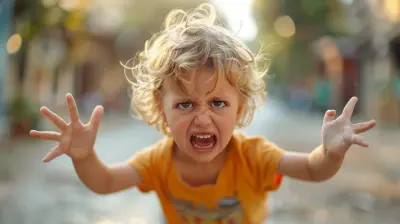
A father I know once spent twenty minutes trying to convince his four-year-old to put on shoes. Reasoning failed. Warnings failed. Bribery worked briefly, then stopped. Finally, he picked up a shoe and said, in a theatrical voice, "I am the Shoe King, and I demand a foot!" His daughter laughed, stuck out her foot, and the battle was over. He did not win because he was smarter or stricter. He won because he changed the emotional channel.
That story captures something most parenting manuals mention in passing but rarely take seriously: humor is not a break from the work of raising children. It is part of the work. It shapes how children experience authority, how they handle frustration, how safe they feel in their own home, and eventually, how they treat themselves when things go wrong. Used well, humor becomes one of the most efficient tools a parent has. Used poorly, it becomes a weapon that teaches children to hide their feelings. The difference between those two outcomes is not luck. It is skill.
Why Humor Works in the First Place
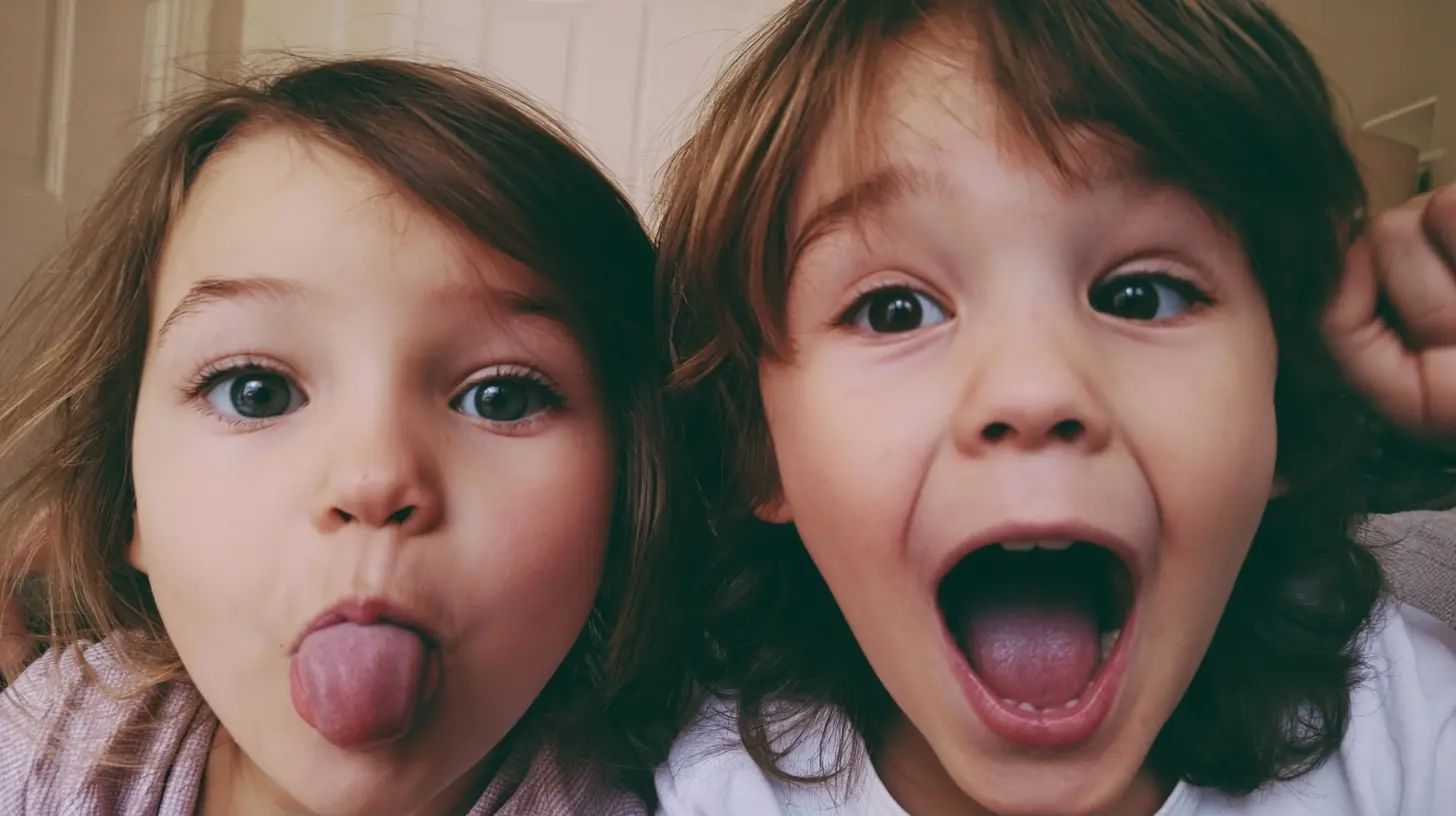
To understand humor's role in parenting, it helps to understand what humor actually does in the brain and in relationships. Humor is not just entertainment. It is a social signal.When a parent makes a genuine, warm joke during a tense moment, several things happen at once. The child's nervous system gets a signal that the situation is safe. Laughter triggers physical relaxation. It lowers the sense of threat. A child who was bracing for a fight suddenly finds that the fight is not happening. That shift is not cosmetic. It changes what the child can hear and absorb.
Humor also creates what researchers often describe as a shared private world. Inside jokes, silly family phrases, and running gags build a sense of "we are us." That identity matters. Children who feel like part of a team with their parents are more willing to cooperate, more likely to talk about problems, and more resilient when life gets hard.
There is also a practical cognitive benefit. Humor requires flexible thinking. When a parent turns a problem into something funny, they are modeling the ability to reframe. A spilled glass of milk is a disaster, or it is "the great milk flood of Tuesday." The event has not changed. The meaning has. Children who watch adults do this repeatedly start doing it themselves. That is the seed of resilience.

The Difference Between Humor With Kids and Humor At Kids
Most parents who struggle with humor are not failing to be funny. They are aiming the humor in the wrong direction. This is the single most important distinction in this entire topic.Humor with a child means the joke is shared. The child is in on it. The parent is laughing too. The child feels included, seen, and safe. Humor at a child means the child is the target. The parent may be laughing, but the child is not. The child feels exposed, small, or mocked.
Consider two responses to a child who trips and falls while carrying a plate.
Response one: "Whoa, that plate just went flying! Did you see that? It looked like a frisbee. Are you okay?" The child is invited into the moment. The parent is not laughing at the fall. The parent is laughing at the absurdity of the flying plate.
Response two: "Nice job, clumsy. That is the third plate this month." The child is the punchline. The parent might think this is gentle teasing. It rarely lands that way. Children do not have the emotional distance to separate "I am joking" from "I am being criticized." They hear the criticism.
The rule is simple and worth repeating: if the child is not laughing, it is not humor. It is something else wearing humor's clothing.

How Humor Builds Emotional Regulation
Children are not born knowing how to handle big feelings. They learn by watching adults handle big feelings. Humor is one of the most visible ways adults do that.Imagine a child who is furious because a tower of blocks fell down. The parent has two broad options. Option one is to match the intensity: "Calm down, it is just blocks." Option two is to acknowledge the feeling and then introduce play: "That tower looked so proud of itself, and then it just gave up. Should we give it a funeral or rebuild it bigger?" The second response does not dismiss the frustration. It honors it and then offers a way out.
Over time, children who see this repeatedly internalize a crucial lesson: strong feelings do not have to run the show. You can feel angry and still find a way to move. That is the foundation of emotional regulation, and it is built in small moments, not big lectures.
There is a caveat. Humor should not be used to skip a feeling. If a child is genuinely grieving, scared, or hurt, a joke can feel like a door slamming shut. The skill is to read the room. Humor works best when it follows acknowledgment, not when it replaces it.
Humor as a Discipline Tool: The Good, the Bad, and the Risky
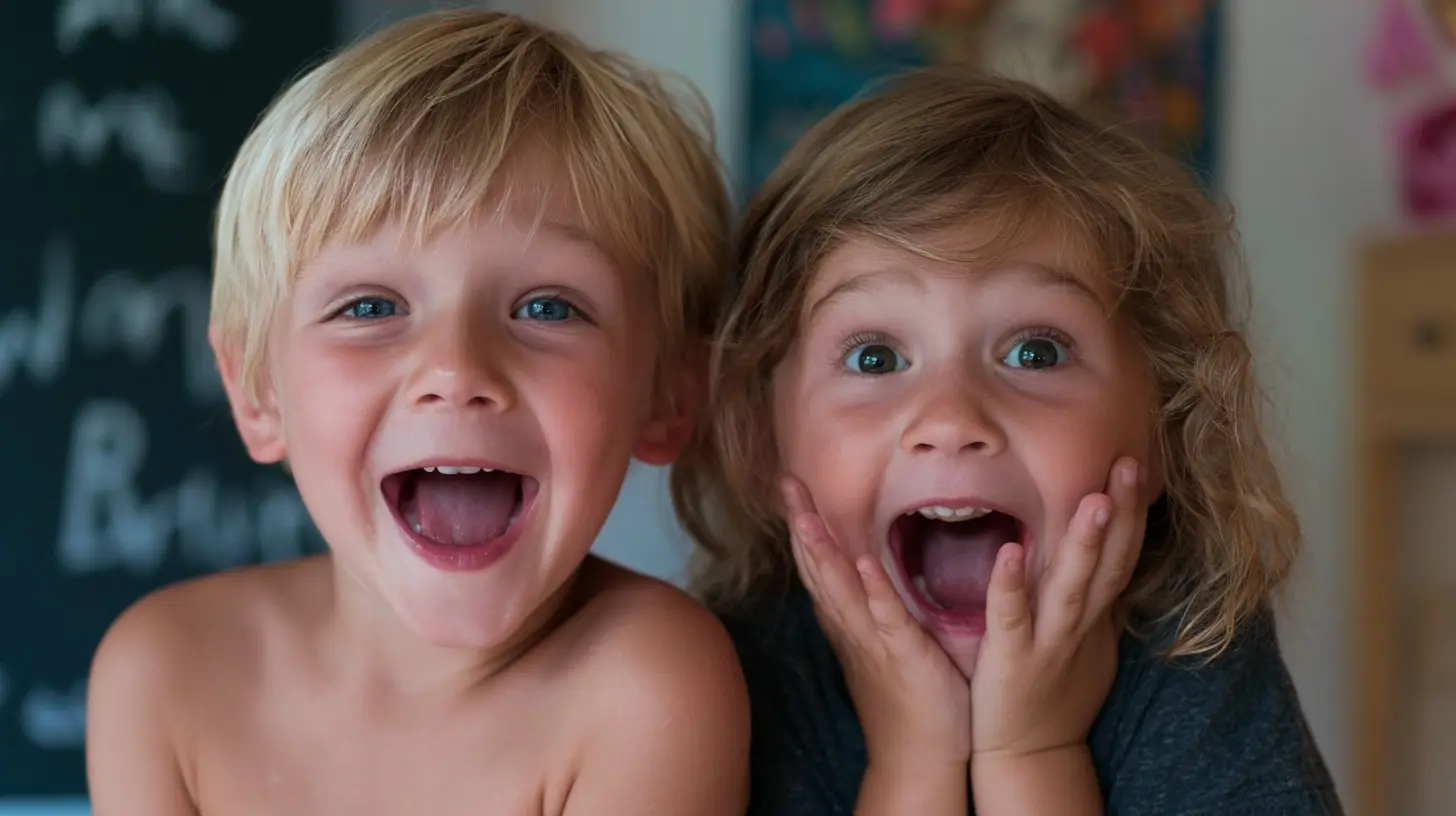
Many parents first get interested in humor because they want a discipline strategy that does not involve yelling. That is a reasonable goal. But humor in discipline is a narrow path with steep sides.When humor works in discipline, it works by redirecting. A child refusing to get in the car becomes a game: "I bet you cannot get in before I count to three. Actually, I bet I can beat you." A child throwing food becomes a silly rule: "In this house, peas go in mouths, not on walls. Walls do not eat peas." The child's resistance is not crushed. It is rerouted.
When humor fails in discipline, it usually fails in one of three ways.
First, it can become inconsistent. If a parent jokes about bedtime one night and enforces it sternly the next, the child learns that rules are negotiable. Humor should not replace the rule. It should carry the rule.
Second, it can become sarcasm. Sarcasm is humor's hostile cousin. It sounds like a joke but delivers a sting. "Oh great, you are finally ready. Only twenty minutes late." Children hear the contempt, not the comedy.
Third, it can become a performance for the parent. Some parents enjoy being the funny one more than they enjoy being the effective one. If the joke is for the parent's benefit, the child will eventually notice.
The best practice is to keep humor as a delivery system, not as the message. The message stays the same: this is what we do, this is why, and I am on your side.
What Humor Teaches Children About Mistakes
One of the most valuable things humor does is change how a family treats mistakes. In homes where every error is a crisis, children learn to hide errors. In homes where errors are met with warmth and a bit of lightness, children learn to own them.Consider a child who spills juice on a homework assignment. A parent who panics teaches the child that mistakes are catastrophic. A parent who says, "Well, that homework is now a modern art piece. Let's see if we can dry it and rewrite it," teaches something different. The child learns that problems are solvable, that adults do not fall apart over small things, and that it is safe to admit when something went wrong.
This matters far beyond childhood. Adults who cannot tolerate their own mistakes often struggle with anxiety, perfectionism, and avoidance. The roots of that pattern are usually in childhood, in homes where mistakes were treated as moral failures. Humor is one of the simplest ways to prevent that pattern from taking hold.
That said, humor should not be used to avoid accountability. If a child hurts someone, the response is not a joke. It is repair. Humor can soften the moment, but it cannot replace the lesson.
The Role of Humor in Parent-Child Connection
Connection is not built in the big moments. It is built in the small ones. Humor is one of the most efficient connection tools available because it works in seconds.A silly voice during tooth brushing. A running joke about the family dog's secret life. A tradition of telling the worst possible joke at dinner. These things cost nothing and take almost no time, but they accumulate. Over years, they become the texture of the relationship.
There is a reason children remember the silly stuff. It is not because the silly stuff was important in itself. It is because the silly stuff happened when everyone was relaxed, present, and on the same side. Those moments become the emotional bank account that carries the relationship through harder seasons.
Teenagers are a good test of this. Teens often pull away from parents. But teens who grew up with a family culture of humor tend to keep a thread of connection, even when they are distant in other ways. A shared joke can be a bridge when a direct conversation is too much.
When Humor Backfires
Humor is not a universal good. It has failure modes, and parents should know them.The first failure mode is timing. A joke during a genuine crisis reads as abandonment. If a child just lost a pet or failed a test they cared about, humor can feel like the parent is not taking the pain seriously.
The second is targeting. Humor that points at the child's body, intelligence, fears, or identity is not humor. It is harm with a laugh track. This includes "jokes" about a child's weight, their grades, their speech, or their friends. Children internalize these for decades.
The third is using humor to avoid hard conversations. Some parents joke their way out of every uncomfortable topic. The child learns that certain subjects are off limits, not because they are forbidden, but because the parent cannot sit with them.
The fourth is using humor to manage the parent's own anxiety. A parent who jokes constantly may be signaling that they cannot tolerate stillness or seriousness. Children pick up on this. They learn to perform lightness to keep the parent comfortable.
The fix for all four is the same: check the child's face. If the child is laughing, the humor is working. If the child is shrinking, quiet, or forcing a smile, stop.
Humor and Different Ages: What Changes
The role of humor shifts as children grow. What works at four does not work at fourteen.With toddlers and preschoolers, humor is mostly physical and absurd. Silly voices, exaggerated movements, and gentle surprises land well. Their sense of humor is developing, and they love repetition. The same joke can work for months.
With school-age children, humor becomes more verbal. Wordplay, jokes, and shared references start to matter. This is also when children begin to test teasing. Parents should watch for signs that a child is using humor to poke at siblings in ways that sting.
With teenagers, humor becomes more sophisticated and more delicate. Teens often use humor to manage their own discomfort. Parents who can laugh with a teen, without laughing at them, keep a valuable channel open. Parents who use humor to assert authority or to minimize a teen's concerns will find the channel closing fast.
The constant across all ages is respect. Humor that respects the child works. Humor that diminishes the child does not.
Practical Ways to Build a Humor-Friendly Home
Parents who want more humor in their home do not need to become comedians. They need to build small habits.Start with a family language. Give silly names to ordinary things. The laundry basket becomes the sock monster. The car becomes the rocket. These small inventions create a shared vocabulary that belongs only to your family.
Use callbacks. If something funny happened last week, bring it up again. "Remember when the cat sat on your homework? I think she was trying to help." Callbacks build continuity and make children feel like part of a story.
Let children be funny. Some parents accidentally dominate the humor. They are the ones making the jokes, and the child is the audience. Flip it. Laugh at your child's jokes, even the bad ones. Ask them to tell you the funniest thing that happened at school. Let them be the source.
Be willing to be the butt of the joke sometimes. A parent who can laugh at their own mistakes models humility. It also gives the child permission to laugh at themselves later.
Keep a light touch. Humor works best when it is not forced. If a joke falls flat, let it go. The goal is not constant comedy. The goal is a home where lightness is available when it is needed.
Common Misconceptions About Humor and Parenting
Several myths about humor and parenting deserve correction.Myth one: humor undermines authority. In reality, humor often strengthens authority because it makes the parent more likable without making them less credible. Children cooperate more with adults they trust and enjoy. The key is that the rule still stands. Humor is the wrapping, not the gift.
Myth two: serious parents raise serious kids. Not necessarily. Serious parents can raise children who are responsible and thoughtful. But children who never see their parents laugh may struggle to access joy themselves. Balance matters more than a single style.
Myth three: humor is a personality trait. Some people are naturally funnier than others, but humor in parenting is a skill. It can be practiced. It can be improved. It does not require a natural gift.
Myth four: humor means being silly all the time. Constant silliness can be exhausting and can signal that the parent cannot handle seriousness. The goal is not nonstop comedy. The goal is the ability to shift into lightness when it helps.
The Trade-Offs Parents Should Consider
Like any tool, humor has trade-offs. Parents who lean heavily on humor should be aware of them.Humor can make a parent more approachable, but it can also make it harder for a child to know when something is serious. Parents need to signal clearly when a topic requires a different tone. A simple phrase like "I am going to be serious for a minute" can help.
Humor can defuse tension, but it can also delay necessary conflict. Some conflicts need to happen. Avoiding them with jokes can create long-term problems.
Humor can build connection, but it can also become a family's only emotional language. If a child learns that every feeling must be wrapped in a joke, they may struggle to express sadness or fear directly. Parents should make room for both.
The healthiest families are not the funniest ones. They are the ones where humor is one tool among many, used with awareness and adjusted to the moment.
Final Thoughts
Raising happy kids is not about engineering constant happiness. It is about building children who can handle the full range of life, including the hard parts. Humor helps with that. It teaches flexibility. It builds connection. It softens conflict. It models resilience. It makes the daily grind of parenting more bearable for everyone involved.But humor is not magic. It is a skill, and like any skill, it has rules. Aim it with your child, not at them. Use it to carry a message, not to replace one. Read the room. Stop when it stops working.
The parents who do this well are not the funniest people in the room. They are the ones who understand that a shared laugh is not a distraction from the real work of parenting. It is one of the most human ways to do that work.
all images in this post were generated using AI tools
Category:
Parenting InspirationAuthor:

Zelda Gill