The Link Between Play and Happiness in Early Childhood
24 October 2026
Ask any parent to describe a happy child and the image that comes to mind is usually a child at play. Not a child finishing a worksheet, not a child sitting quietly through a lesson, but a child deep in the middle of building, pretending, chasing, or negotiating the rules of a game. That mental image is not sentimental. It reflects something real about how young children work. Play and happiness are not just companions in early childhood. They are, in many ways, the same process viewed from two angles.
This article examines that link closely. It looks at why play produces happiness, what kind of play does this best, where well-meaning adults get in the way, and how to protect play without turning it into another item on a to-do list.
What Happiness Means for a Young Child
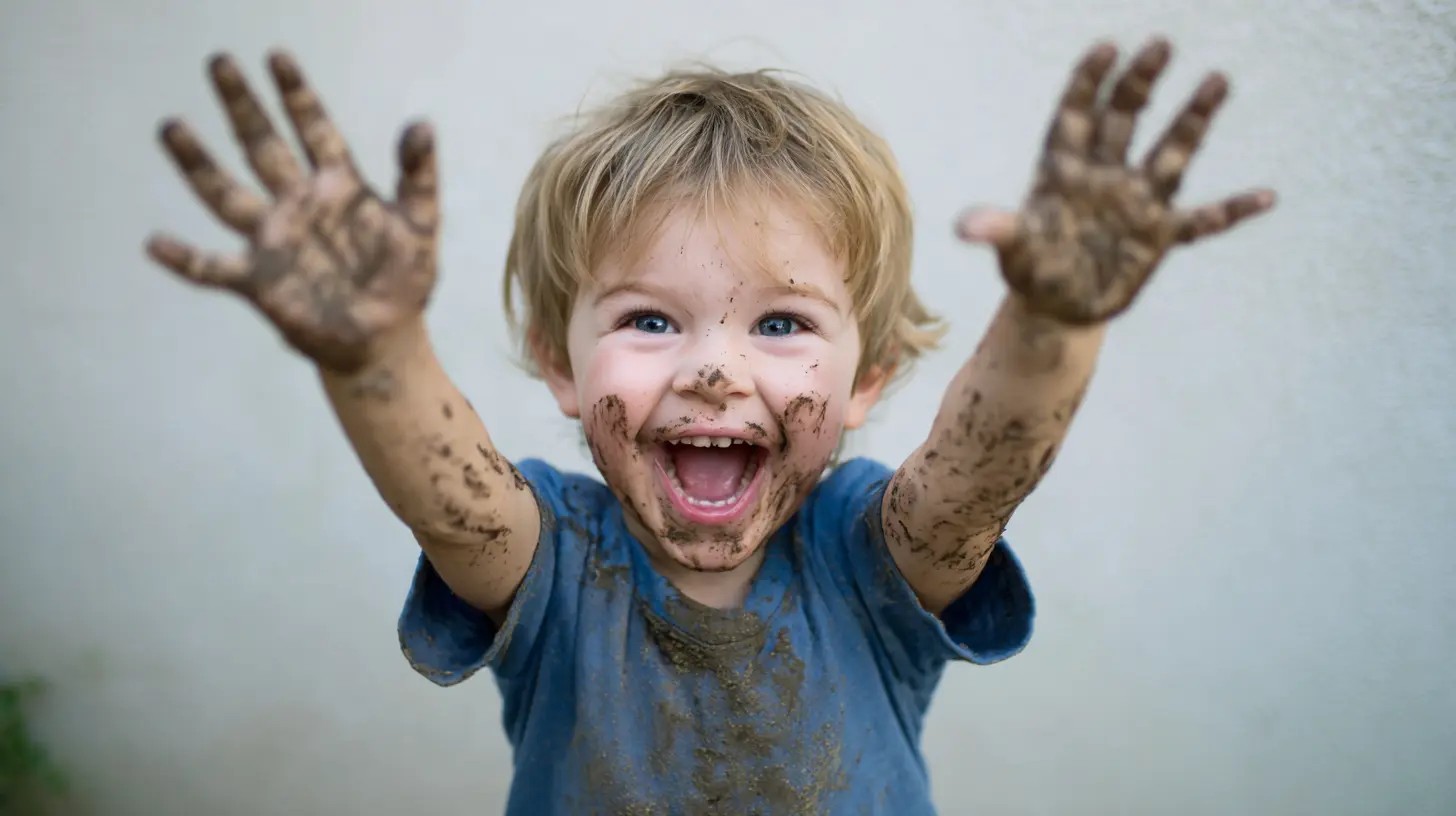
Adult happiness is often described as a sustained feeling, a general sense of satisfaction with life. Early childhood happiness looks different. It is more moment to moment. A four year old can be devastated that a tower fell and, ninety seconds later, delighted by a new game. This is not inconsistency. It is development.For young children, happiness is closely tied to engagement. A child who is absorbed in an activity, who feels capable, who is connected to the people around them, and who has some control over what happens next is a child who is, in the meaningful sense, happy. Researchers who study child well-being often describe these ingredients as engagement, competence, connection, and autonomy. Notice that all four appear naturally during good play. That overlap is the core of the link.
It also means happiness in early childhood is not the same as constant smiling. A child concentrating hard on a puzzle may look serious, even frustrated. A child deep in pretend play may be working through something tense. The happiness is in the absorption and the meaning, not in a permanent grin.
Why Play Produces Happiness: The Mechanisms
The connection is not magic. It runs through specific, observable mechanisms.Play gives children control
Young children spend most of their day following adult schedules. Play is one of the few arenas where they set the terms. When a child decides that the sofa is a boat and the cushions are waves, they are exercising authority over their own world. That sense of control is a well-documented contributor to well-being at every age, and in early childhood it is scarce enough that play becomes a primary source of it.Play matches children's development
Play is the natural format in which young children practice skills that are not yet fully formed. A child who cannot yet explain a complex feeling can act it out with toys. A child who struggles to share in a structured setting may negotiate turn-taking more easily in a game they chose. Play meets children where they are, which reduces the gap between what is expected of them and what they can currently do. That gap, when it is too wide, is a major source of distress in early childhood.Play builds competence
There is a particular kind of happiness that comes from doing something well. In play, children repeatedly attempt things at the edge of their ability: stacking one more block, hopping one more step, convincing a friend to join a game. Success is frequent and low-stakes. Each small win feeds a child's sense of being capable, and that sense is one of the strongest predictors of how children approach challenges later.Play creates connection
Much of early childhood happiness is social. Play is the main vehicle through which young children build relationships. Shared pretend play, rough and tumble games, and simple turn-taking games all require children to read others, manage their own impulses, and repair small conflicts. The happiness that comes from playing with someone else is not incidental. It is the reward that keeps children practicing social skills.Play allows recovery
Children experience stress too, from transitions, from conflict, from the ordinary frustrations of being small in a big world. Play offers a low-cost way to process that stress. A child who has been frightened by a dog may spend a week making toy dogs go to sleep. This is not avoidance. It is how young children digest experience. The relief that follows is real.
Types of Play and Their Different Gifts
Not all play produces the same benefits, and a healthy childhood usually includes a mix. Understanding the differences helps parents make better decisions about time, space, and materials.Free play
Free play is child-directed and open-ended. No adult agenda, no prescribed outcome. This is the type most strongly associated with the sense of control and absorption described above. It is also the type most vulnerable to being squeezed out by structured activities and screens. Free play is not the same as unsupervised play, though it can include moments of low supervision in safe settings. The key feature is that the child, not the adult, decides what happens.Pretend play
Pretend play, sometimes called imaginative or symbolic play, peaks in the preschool years. It supports language, self-regulation, and emotional understanding. It is also a direct route to happiness because it lets children inhabit roles and scenarios they cannot access in real life. A child who is always the youngest in the family can be the powerful queen. A child who feels guilty about a mistake can have a toy character make the same mistake and be forgiven.Physical play
Running, climbing, chasing, wrestling, and dancing all release energy and produce obvious joy. Physical play also supports brain development, balance, and coordination. Rough and tumble play, in particular, teaches children to read signals, calibrate force, and stop when a partner signals discomfort. It looks chaotic to some adults but is usually highly regulated by the children themselves.Constructive play
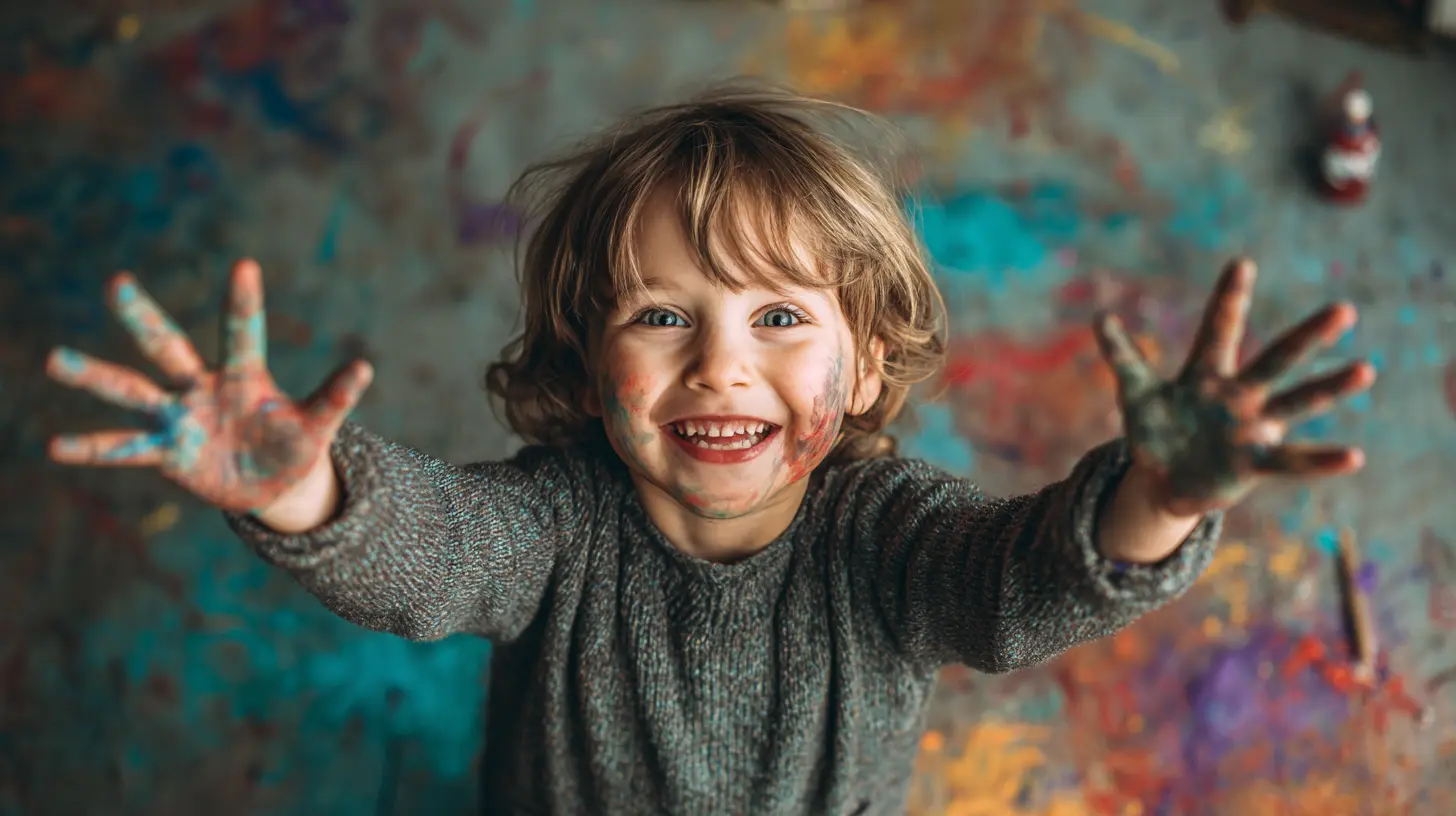
Building, drawing, molding, and making things sit between free play and structured activity. Constructive play produces a special kind of satisfaction because it leaves something behind. The happiness here is often quieter but longer lasting, tied to pride in a finished product and the process of solving problems along the way.Games with rules
Simple games with rules, from hide and seek to board games, introduce children to cooperation, fairness, and losing. These games can produce frustration as well as joy, and that is part of their value. Learning to lose without falling apart is a skill built through repeated, low-stakes exposure.
What the Research Suggests Without Overstating It
It is tempting to claim that play causes happiness in a simple, linear way. The reality is more nuanced. Studies of play and child well-being generally show associations rather than clean cause and effect, partly because children who are already happy and well-regulated may seek out more play, and partly because play is hard to measure precisely.What the evidence does support is a set of consistent patterns. Children who have regular opportunities for free play tend to show better self-regulation, stronger social skills, and lower stress. Play deprivation, whether from overscheduling, unsafe environments, or excessive screen time, is linked with poorer outcomes in these areas. The direction of the relationship is not always clear, but the pattern is robust enough to justify treating play as essential rather than optional.
A responsible reading of the research is this: play is not a guaranteed happiness switch, but it is one of the most reliable environments in which the ingredients of early childhood happiness tend to appear.
The Role of Adults: Support Without Taking Over
Adults matter enormously in children's play, but the way they matter is easy to get wrong. The default mistake is to take over. A parent who turns every play session into a lesson, who corrects the storyline, who insists on the "right" way to build the tower, is replacing the child's control with their own. The happiness often drains out immediately.A better approach is to think of the adult as a stage manager rather than a director. You set up the conditions, you stay nearby, you respond when invited, and you step back when you are not needed. This is sometimes called scaffolding: providing just enough support to let the child stretch, then withdrawing it.
In practice, this looks like:
- Offering materials without prescribing what to do with them.
- Letting the child lead the story, even when it is repetitive or nonsensical.
- Joining in when asked, and following the child's rules rather than improving them.
- Narrating what you see rather than evaluating it. "You are stacking the red blocks on top" works better than "Good job."
- Resisting the urge to resolve every conflict instantly. Sometimes children need a moment to work it out, with your calm presence as a safety net.
There are times when adult involvement is clearly appropriate: when safety is at risk, when a child is genuinely stuck and asking for help, when a child is being excluded or harmed. The skill is in telling the difference between a child who needs support and a child who needs space.
Common Mistakes and Misconceptions
Several beliefs about play and happiness are widespread and worth correcting.Misconception: Happy children are always playing happily. In reality, play includes struggle. A child working through a difficult puzzle or a tense pretend scenario may not look happy. Judging play by surface smiles misses its deeper value.
Mistake: Treating play as a reward for finishing "real" work. When play is framed as something earned after learning, children absorb the message that play is less important. In early childhood, play is learning. It should be a regular part of the day, not a treat.
Mistake: Filling every gap with structured activities. Classes, lessons, and organized sports have value, but a schedule with no empty space leaves no room for the kind of self-directed play that produces the deepest engagement. Boredom, within reason, is often the doorway to creative play.
Misconception: More toys mean more play. In practice, too many toys can overwhelm children and shorten play. A smaller, well-chosen set that invites open-ended use often produces longer and richer play than a room full of single-purpose items.
Mistake: Using screens as a substitute for play. Screens can be entertaining, and some digital content has educational value, but passive screen time does not provide the same control, physical engagement, or social negotiation that active play does. It is not equivalent, and treating it as a swap can quietly reduce the very experiences that support happiness.
Misconception: Play must be productive. Adults often want play to lead somewhere, to produce a skill or a finished object. For young children, the process is the point. A game that goes nowhere and builds nothing can still be doing important work.
Designing Environments That Invite Play
If play is the engine of early childhood happiness, then the environment around the child is the fuel system. A few practical principles make a real difference.Keep it simple and open-ended. Blocks, boxes, cloths, pots and pans, dolls, balls, and natural materials like sand and water offer more play value than toys that do one thing. Open-ended materials invite children to decide what they are.
Make it accessible. Toys stored out of reach or in locked cupboards reduce spontaneous play. Low shelves and clear containers let children choose and return materials independently, which also supports the sense of control that fuels happiness.
Create zones. A quiet corner for books and puzzles, a space for building, and an area where mess is allowed all help children shift between types of play without constant adult management.
Protect time. The single most important environmental factor is often time. A child who has twenty minutes between activities cannot sink into deep play. Long, unhurried stretches, especially outdoors, are where the richest play tends to happen.
Allow mess and risk within reason. Play that is constantly interrupted by "be careful" and "not there" loses momentum. Reasonable risk, like climbing a low wall or using real tools with supervision, builds confidence and is itself a source of happiness.
Play, Happiness, and the Long Game
It is worth stepping back from the daily details to consider why this matters beyond the preschool years. The happiness children experience in play is not just a pleasant byproduct. It is practice. Through play, children rehearse the skills that will support their well-being for decades: initiating activities, solving problems, managing frustration, connecting with others, and recovering from setbacks.Children who have had rich opportunities for play tend to enter formal schooling with stronger self-regulation and social skills, which in turn makes early school experiences more positive. That early positivity can set a pattern that persists. The link between play and happiness in early childhood is therefore not only about today. It is about building a foundation.
At the same time, it is important not to turn this into pressure. Play does not need to be optimized. A child does not need the perfect playroom or the ideal parenting technique. What children need is enough time, enough freedom, and enough of the adults they love nearby. The rest tends to take care of itself.
A Practical Summary for Parents and Caregivers
If you take one thing from this article, let it be this: protect play as a priority, not a leftover. In concrete terms, that means:- Guard long, unstructured stretches of time, especially outdoors.
- Resist the urge to direct or correct play unless safety or genuine distress requires it.
- Choose fewer, more open-ended toys and make them easy to reach.
- Accept that play will include frustration, mess, and repetition, and that these are features, not bugs.
- Notice when your child is absorbed and let that absorption run its course.
- Treat your own presence as part of the environment: calm, available, and not in charge.
None of this requires special equipment or expertise. It requires a shift in how play is valued. When play is understood as the natural setting for engagement, competence, connection, and control, the link to happiness stops being a mystery. It becomes something you can see every day, in the child who is lost in a game and, for that reason, entirely at home in the world.
all images in this post were generated using AI tools
Category:
Raising Happy KidsAuthor:

Zelda Gill

